Best Dictionary Chrome Extensions for Writers (2026)
Compare the best dictionary Chrome extensions for writers in 2026—offline literary editions vs fast WordNet tools, features, and who each is for.
If you're a writer, you know how breaking focus to look up a word can disrupt your flow. Dictionary Chrome extensions solve this by offering instant access to definitions, synonyms, and more - right where you're working. In 2026, these tools have advanced to include features like AI-powered suggestions, tone adjustments, and offline capabilities. For PDF work in the browser, see our guide to the best free PDF Chrome extensions.
Here are three standout options:
- Webster's 1913 Dictionary by Artisan Strategies: Offers rich, historical definitions with offline access. Great for literary depth but lacks modern synonyms.
- 1913 Classic Dictionary - Offline Lookup: Similar to Webster's 1913, with reliable offline access and poetic meanings. However, it may feel slow for quick lookups.
- WordNet-Based Extensions like WordQuake: Focuses on speed and semantic relationships like synonyms. Requires internet and lacks historical richness.
Quick Comparison
| Extension | Strengths | Limitations |
|---|---|---|
| Webster's 1913 Dictionary | Offline access, literary focus | Historical language, no synonym lookup |
| 1913 Classic Dictionary | Offline, detailed meanings | Slower, uses older phrasing |
| WordNet Extensions (e.g., WordQuake) | Fast, modern definitions, synonyms | Needs internet, less literary depth |
Choose based on your writing needs: historical depth and offline access or speed and modern clarity.

1. Webster's 1913 Dictionary by Artisan Strategies
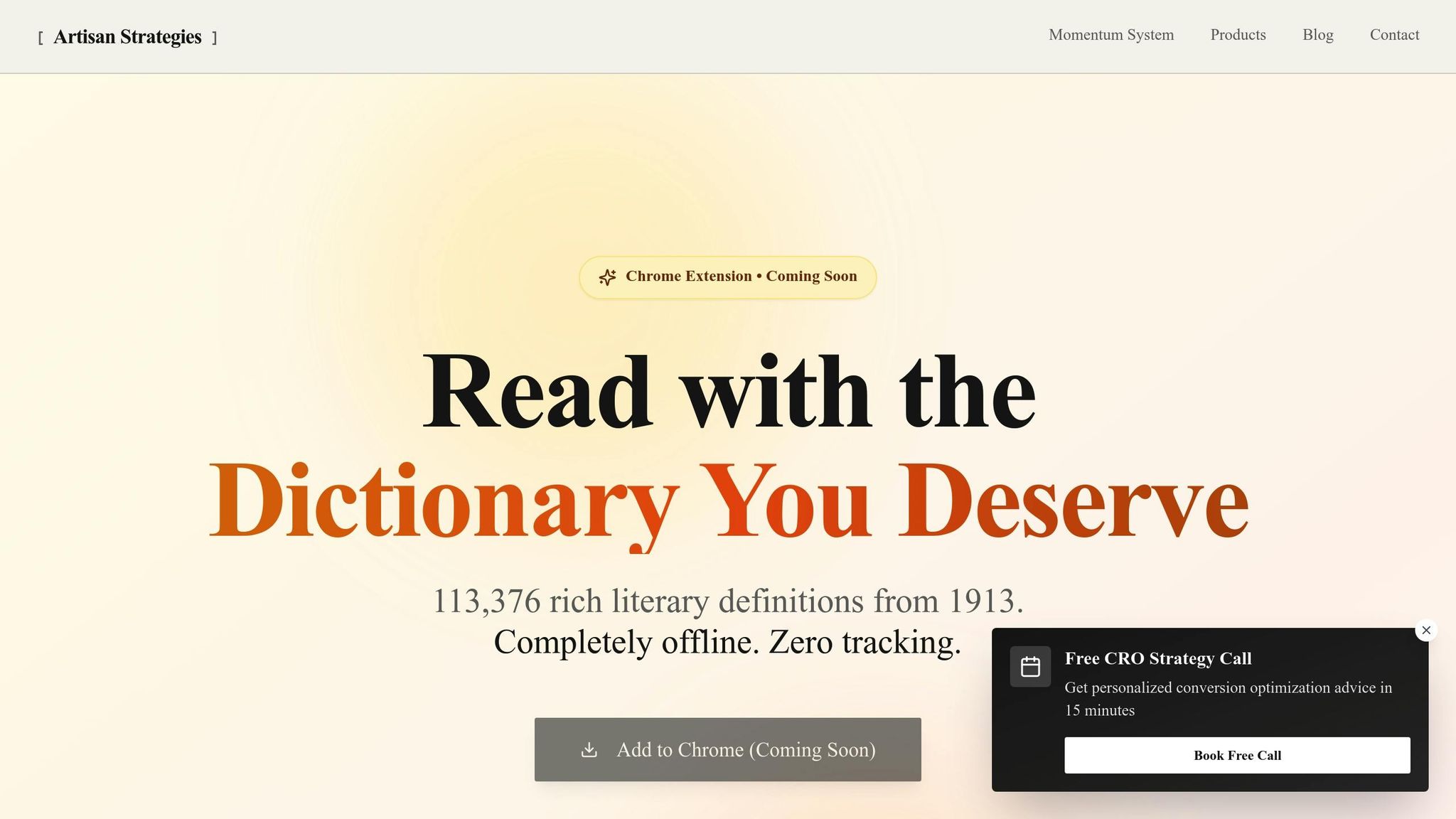
Webster's 1913 Dictionary by Artisan Strategies takes you back in time, offering the full unabridged text of the 1913 Webster's Dictionary, renowned for its depth and literary elegance.
Word Count and Coverage
This extension goes beyond basic definitions, diving deep into the subtle meanings often overlooked by modern dictionaries. It provides detailed explanations steeped in historical context, all while maintaining a literary charm that sets it apart.
Literary Richness
Where modern dictionaries often prioritize brevity, the 1913 edition shines with expressive definitions and examples drawn from literary greats like Milton, Shakespeare, and Tennyson. For writers and poets, this isn't just a tool for understanding words - it's a gateway to their literary and emotional resonance.
Offline Capability
No internet? No problem. The extension works seamlessly offline and syncs automatically when you're back online, ensuring your creative flow isn't interrupted.
Privacy
Your privacy matters. This extension doesn’t track your browsing habits or record your word lookups, making it a trustworthy companion for sensitive writing projects.
2. 1913 Classic Dictionary - Offline Lookup

The 1913 Classic Dictionary extension brings the timeless charm of Webster's historical text to your fingertips, offering definitions that are rich in literary depth while avoiding modern distractions. Let’s delve into how its offline functionality and instant retrieval features make it an essential tool for writers.
Offline Capability
This extension operates entirely offline, making it a dependable companion for writing, no matter where you are. Whether you're working in a quiet café with spotty Wi-Fi or on a long flight, the dictionary remains fully accessible. Since the entire database is stored on your device, there’s no need to wait for server responses, ensuring uninterrupted access to definitions[2].
Instant Retrieval
Thanks to its intuitive dropdown feature, definitions appear instantly as you type. This eliminates the lag often experienced with online tools and keeps your workflow smooth. It’s a fast and efficient way to find the words you need without breaking your creative momentum[2].
Privacy
The developer emphasizes that the extension does not collect or use your data. Your word searches remain completely private, with no data being sold or used for profiling. This commitment to privacy ensures that your writing process stays personal and secure[1].
Literary Richness
The dictionary offers nuanced, poetic definitions that reflect the literary elegance of the 1913 edition. As vsrixyz aptly describes, "The 'right' dictionary would be Webster's New International Dictionary of the English Language originally published in 1909 and reprinted in 1913. It is known by word nerds as Webster's 1913"[3]. With no ads to distract you, your focus stays where it belongs - on your writing[2].
3. WordNet-Based Extensions like WordQuake
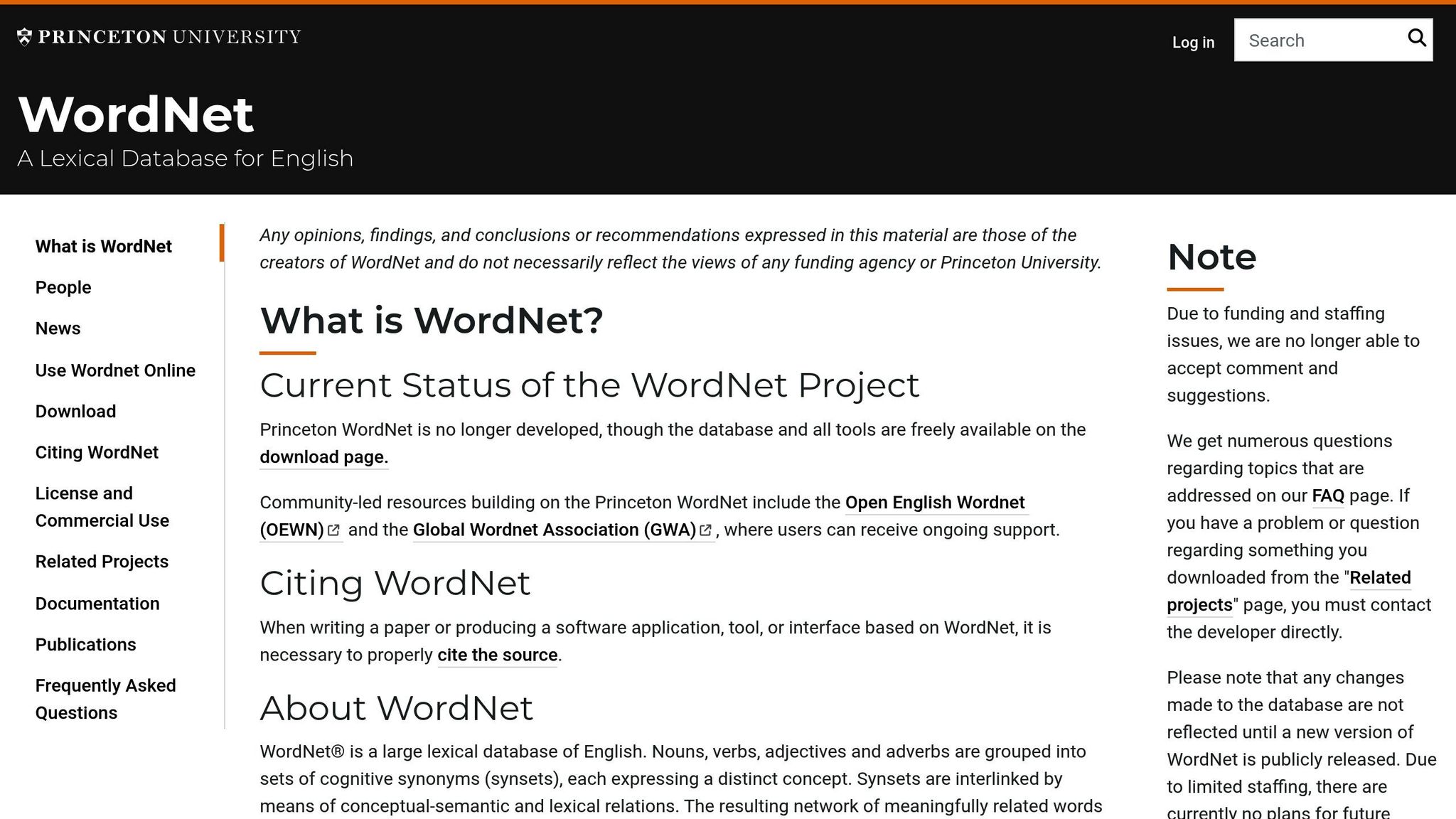
WordNet-based extensions offer a modern twist on dictionary tools, providing quick, WordNet-powered definitions that integrate effortlessly into your workflow. Unlike the historically rich, locally stored options mentioned earlier, these tools focus on speed and clarity.
Word Count and Coverage
WordQuake is a great example of this approach. It taps into Princeton's WordNet lexical database to deliver detailed and well-structured definitions. This semantic network ensures that word meanings are presented clearly, helping writers understand context and usage without delay.
Offline Capability
One downside of WordNet-based tools, such as WordQuake, is their reliance on an active internet connection. While the earlier offline-friendly options excel in low-connectivity situations, WordNet-based extensions can be less reliable in such scenarios.
Literary Richness
WordNet-based tools prioritize efficiency, offering instant pop-up definitions that are concise and to the point. Unlike the poetic and historically nuanced definitions found in older dictionaries like the 1913 editions, these tools focus on delivering straightforward explanations, making them perfect for writers who value speed over literary flair.
Pros and Cons
Choosing the right extension depends on your writing style and specific needs. Here's a closer look at the strengths and limitations of each option, based on our reviews.
Webster's 1913 Dictionary by Artisan Strategies is perfect for those seeking literary depth. It provides rich, classic definitions with examples from literary icons like Milton, Shakespeare, and Tennyson. Plus, it works offline, making it a dependable choice anywhere. However, its historical language can feel unfamiliar if you're accustomed to modern dictionaries, and it focuses more on poetic definitions than on finding synonyms.
1913 Classic Dictionary - Offline Lookup also emphasizes historical depth and offline access. Like Webster's 1913, it offers detailed, literary meanings, but its slower lookup speed and older phrasing might not suit everyone looking for quick, modern definitions.
WordNet-based extensions like WordQuake stand out for their speed and ease of use. They deliver immediate, clear definitions while maintaining your writing flow. They also provide semantic relationships like synonyms and hyponyms, which are ideal for finding the perfect word. However, they require an active internet connection, making them less reliable in offline settings, and they lack the literary richness of the 1913 editions.
Here's a quick comparison to help you decide:
| Extension | Strengths | Limitations |
|---|---|---|
| Webster's 1913 Dictionary | Rich literary definitions with classic examples; works offline | Historical language may feel unfamiliar; lacks synonym lookup |
| 1913 Classic Dictionary | Reliable offline access; detailed, poetic meanings | Slower for quick lookups; uses archaic phrasing |
| WordNet Extensions | Instant definitions; semantic relationships; modern and clear | Requires internet connection; less focus on literary depth |
If historical depth and offline reliability matter most to you, the 1913 editions are great choices. On the other hand, if speed and modern clarity are your priorities, WordNet-based tools are the way to go. Your decision ultimately depends on whether you need offline access or prefer quick, straightforward definitions while working.
Conclusion
After diving into the comparisons above, the best dictionary extension for you ultimately depends on your writing process and preferences. The right choice will align with how you write and what kind of connectivity or features you need.
If offline access and a rich literary touch are priorities, Webster's 1913 Dictionary by Artisan Strategies and 1913 Classic Dictionary are excellent options. They offer definitions steeped in history and literary flavor, helping you grasp a word's deeper nuances. On the other hand, if speed and semantic connections like synonyms and hyponyms are more your style, WordNet-based extensions like WordQuake might be a better fit - though keep in mind, they require an internet connection.
But why are 1913 dictionaries still relevant in 2025? Unlike modern tools that focus on efficiency and concise meanings, these editions treat words as an art form. Their definitions, enriched with examples and historical context, capture the beauty of language as it was used by literary greats. They remind us that words are more than just tools - they’re a window into the craft of storytelling.
FAQs
Why is the 1913 dictionary still a valuable tool for writers in 2025?
The 1913 dictionary continues to be a treasured resource for writers even in 2025, thanks to its rich, detailed definitions and historical insights that modern dictionaries often streamline or omit. It dives into archaic meanings, word origins (etymology), and subtle language nuances, making it an exceptional tool for crafting precise and authentic writing.
This classic reference is especially valuable for anyone looking to delve into the depths of the English language - whether for creative projects, historical studies, or expanding their vocabulary. Its emphasis on detail and depth provides writers with a rare opportunity to add sophistication and authenticity to their work.
What are the advantages of using an offline dictionary extension for writers?
An offline dictionary extension lets you look up words without needing an internet connection, making it a lifesaver for writers working in areas with spotty Wi-Fi, while traveling, or even during power outages. Since the dictionary's data is stored directly on your device, definitions and suggestions appear instantly, giving you a seamless and uninterrupted writing experience.
It’s also a great way to protect your privacy and save on data usage. Your search history stays on your device, so there’s no need to worry about third parties tracking your activity. Plus, these extensions are built to run efficiently, delivering quick results without slowing down your browser - a must-have for writers who rely on fast and dependable access to definitions.
How can WordNet-based Chrome extensions improve a writer's productivity?
WordNet-based Chrome extensions are a fantastic resource for writers, offering a detailed web of word meanings, synonyms, and relationships. They make it easier to pinpoint the right word, expand your vocabulary, and fine-tune your language.
By cutting down the time spent hunting for synonyms or clarifying definitions, these tools simplify the writing process and give creativity a boost. If you want to take your writing to the next level, these extensions are definitely worth checking out!
Related reading
- ADHD and Routines: Overcoming Task Paralysis
- Best Free PDF Chrome Extensions 2026 (View, Annotate, Edit)
- Morning Buddhist Practice: 5-Minute Routines for Busy Professionals
- ADHD Task Paralysis: Why You Can't Start & What Actually Helps
- How to Decide What to Work on When Everything Feels Urgent
Useful tools & services
Explore a dictionary built for close reading
Classic Dictionary 1913 offers offline literary definitions. See what the extension includes before choosing it.
Explore Classic Dictionary 1913These are products built by Artisan Strategies.