ADHD Task Paralysis: Why You Can't Start & What Actually Helps
Why ADHD task paralysis freezes you at the start of work—and practical strategies plus tools that actually help you initiate and finish.
Feeling stuck even when you want to start something? ADHD task paralysis is more than procrastination—it's the inability to begin, continue, or finish tasks due to overwhelm, executive dysfunction, or emotional overload. For tools that help initiation, see the best ADHD productivity apps to start working. This affects millions of adults with ADHD, especially in high-pressure environments.
Key Takeaways:
-
Why it happens: Challenges with executive functions (planning, prioritizing, task initiation), decision overload, and time blindness.
-
What makes it worse: Overwhelming task lists, open schedules, and constant switching between tasks.
-
What helps: Break tasks into smaller steps, use visual tools like calendars or boards, and simplify decisions with AI tools like Onsara.
By focusing on small, clear actions and using external tools to reduce mental load, you can overcome task paralysis and make steady progress.

Why ADHD Brains Get Stuck
Executive Function Problems
ADHD task paralysis stems from differences in how the brain's executive functions operate. These functions act as the brain's management system, helping you begin tasks, plan steps, organize thoughts, prioritize responsibilities, and stay on schedule [2][6].
For those with ADHD, several of these essential skills are affected, including task initiation, planning, prioritizing, working memory, cognitive flexibility, and inhibition control [1][2][3][4][5][6][7]. These challenges make it harder to start projects, juggle multiple steps, and manage the emotional weight of feeling overwhelmed [1][6]. On top of that, these executive function struggles amplify the difficulty of handling situations where multiple choices are involved.
Too Many Choices Lead to Shutdown
For an ADHD brain, an overload of options can trigger "choice paralysis", a mental shutdown [1][8][9]. This happens because executive function challenges make it harder to process information, prioritize effectively, and make decisions [1][8][9].
When faced with too many choices - like deciding which task to tackle first on a long to-do list or figuring out how to approach a complicated project - it’s easy to feel overwhelmed. Overanalyzing every option leads to a standstill. Instead of making progress, you’re stuck, mentally drained by the sheer weight of decision-making.
But decision-making isn’t the only hurdle. ADHD also impacts how time is perceived, adding another layer of difficulty.
Time Blindness and Low Motivation
Adding to the struggle, time blindness makes starting tasks even harder. Also known as time agnosia, this condition is the inability to accurately sense the passage of time, estimate how long tasks will take, or feel urgency about deadlines [1][10]. Many people with ADHD tend to underestimate how much time a task will require [1].
This distorted sense of time is closely tied to how the ADHD brain processes dopamine, a neurotransmitter responsible for motivation and reward-seeking behavior [1][9][10][11]. With time feeling abstract or distant and dopamine levels lower than in neurotypical brains, the drive to start tasks diminishes. Even when you know a task is important, it can feel nearly impossible to begin without that internal push.
Work Habits That Make It Worse
Endless Task Lists and Open Schedules
In SaaS and knowledge-based roles, it's common to deal with overwhelming backlogs and open-ended schedules, which can be especially tough on ADHD brains [1]. When you're staring at a never-ending task list without a structured plan, it can feel impossible to figure out where to start. The lack of clear priorities or time limits makes every task seem equally urgent, often leading to decision paralysis and leaving you stuck instead of moving forward.
Constant Switching Between Tasks
Fast-paced work environments often require rapid transitions between emails, meetings, and project work. For those with ADHD, this constant switching can exhaust executive functions [1]. The mental energy needed to refocus repeatedly can make it hard to start or maintain momentum on any single task. On top of that, the steady stream of information can lead to overstimulation, causing your brain to freeze up. With lower dopamine levels, staying engaged becomes a struggle, and decision-making feels even more draining. These work patterns not only sap energy but also make it harder to take meaningful action.
What Actually Helps You Start
Break Tasks into Smaller, Specific Steps
Big projects can feel overwhelming, especially when your brain is wired to see them as giant, unscalable mountains. Tasks like "finish quarterly report" or "redesign onboarding flow" might paralyze you before you even begin. The trick? Break them into bite-sized, specific actions.
For example, instead of tackling the entire report, start with something as simple as replying to one email or writing a single sentence. Experts suggest that these small, manageable actions help you build momentum and chip away at that initial resistance [1][12]. Each step forward makes the bigger goal feel less daunting and more achievable.
Make Time and Priorities Visible
For many people with ADHD, time can feel slippery - hours pass without notice, and estimating how long a task will take can be a guessing game [1]. This "time blindness" can make it hard to prioritize, especially when everything feels equally urgent. Visual tools like time-blocked calendars or Kanban boards can help bring order to the chaos. By turning abstract concepts like time and priorities into something you can see, these tools make it easier to focus on what needs attention right now.
A clear visual layout doesn’t just reduce decision fatigue - it also provides the external structure that can be difficult to create on your own. If you're still feeling overwhelmed by too many options, there are ways to streamline things even further.
Simplify Decisions with Tools Like Onsara
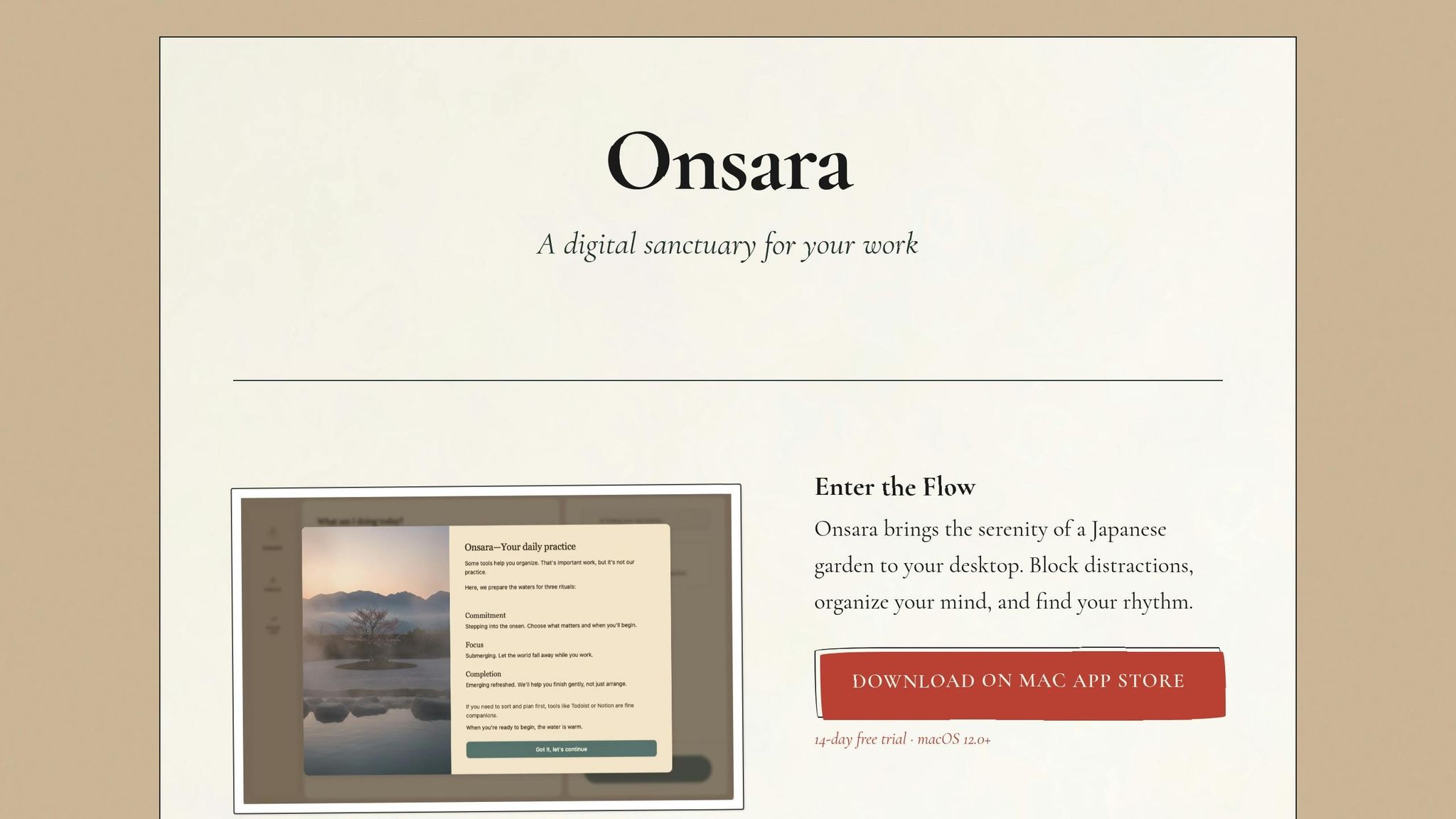
Sometimes, the hardest part of getting started isn’t the work - it’s deciding where to begin when your to-do list feels endless. Traditional productivity apps can actually add to the overload by presenting too many choices. That’s where decision-support tools like Onsara come in.
Onsara uses AI and cognitive task analysis to cut through the noise and highlight the single most meaningful action you can take at any given moment. By narrowing your focus to just one clear next step, it reduces the mental energy spent on decision-making. That means you can stop spinning your wheels and start making progress.
Conclusion
Tackling Task Paralysis: Key Takeaways
ADHD task paralysis is a common challenge, affecting 80–90% of adults with ADHD on a daily basis [6]. The most effective strategies aim to lighten the mental load and cut down on unnecessary decision-making. For instance, breaking tasks into manageable 5–60 minute steps can help build momentum, while tools like time-blocked calendars or visual boards can counteract time blindness by making priorities crystal clear. Feeling stuck? Apps like Onsara can guide you toward identifying that all-important next step.
"This isn't laziness - it's an executive functioning challenge that many people with ADHD share." - Dr. Sharon Saline's Team [6]
The key is consistency over perfection - small steps forward are far better than getting stuck in overthinking.
Interestingly, these personal strategies can also be adapted to improve team dynamics in SaaS environments.
Creating Supportive Systems for SaaS Teams
Just as individuals benefit from breaking tasks into smaller, actionable pieces, teams thrive when they adopt structured systems to reduce friction and boost productivity. The first step? Educate team members about executive dysfunction. This fosters understanding, reduces stigma, and encourages patience. From there, use shared project management tools to break complex projects into clearly defined tasks, creating a sense of accountability that benefits everyone.
Incorporating shared calendars, regular check-ins, and visual dashboards can make progress more tangible. When workflows connect each task to a larger purpose, ADHD minds stay engaged and motivated, avoiding the overwhelm of disconnected to-dos. The result? Teams that harness the creativity and big-picture thinking often associated with ADHD while sidestepping the pitfalls of task paralysis. It’s a win-win for innovation and productivity.
Overcoming ADHD task paralysis when you feel stuck
FAQs
What makes ADHD task paralysis different from procrastination?
ADHD task paralysis occurs when overwhelming emotions, anxiety, or even an emotional shutdown make it nearly impossible to begin a task - even if you genuinely want to. It’s not a matter of willpower but an involuntary response that leaves you feeling stuck or frozen in place.
Procrastination, by contrast, is a conscious decision to put off a task. This delay often stems from avoiding discomfort, boredom, or fear of failure. Unlike ADHD task paralysis, procrastination involves an element of control, whereas task paralysis is deeply tied to emotional and neurological factors that can feel much harder to navigate.
What are effective strategies to overcome task paralysis with ADHD?
To address task paralysis when living with ADHD, start by breaking tasks into smaller, bite-sized steps. This approach can make things feel less overwhelming and more achievable. Another helpful strategy is body doubling - having someone work alongside you to provide a sense of accountability and shared focus.
Using techniques like the Pomodoro method, where you work in short, timed intervals, can also make a big difference. These focused bursts of productivity help tasks feel more approachable and manageable.
You might also explore tools like Onsara, designed specifically to support focus and task management. They can help you stay organized and build momentum, making it easier to overcome procrastination and get things done. Finding what works for you is key to tackling these challenges effectively.
How can Onsara help with ADHD task paralysis?
Onsara provides tools specifically crafted to address ADHD task paralysis, helping tasks feel more approachable. It allows you to break down big projects into smaller, easier-to-handle steps and offers visual planning tools to keep everything organized. By creating simple and gentle ways to begin tasks, Onsara helps to ease the mental barriers that often make starting so difficult.
These tools do more than just improve focus - they help you build momentum, making it easier to stay on track and achieve your goals. With Onsara, managing ADHD task paralysis feels less overwhelming and far less stressful.
Related reading
- How to Decide What to Work on When Everything Feels Urgent
- Why We Avoid Feature Bloat
- Best Apps for ADHD Task Paralysis (Tested 2026)
- "I Know What I Need to Do But I Can't Start" - The ADHD Freeze Explained
- 7 Best ADHD Productivity Apps to Beat Task Paralysis (2026)
Useful tools & services
Explore our tools for everyday work
Browse our focus app, PDF reader, and other products to find an option that fits your task.
Browse our productsThese are products built by AGS Advising.