top 20 brands or products that match these criteria: multivariate vs. a/b testing pros and cons.
Compare 20 A/B and multivariate testing platforms with pros, cons, traffic recommendations, scalability, and integrations for SaaS teams.
If you're deciding between A/B testing and multivariate testing tools, this guide compares 20 platforms to help SaaS businesses optimize their websites, features, and user experiences. Here's the key takeaway:
- A/B Testing: Best for low-traffic pages and simple experiments. Compares two versions to find the better performer.
- Multivariate Testing (MVT): Ideal for high-traffic sites. Tests multiple elements (e.g., headlines, images) together to find the best combination.
Quick Overview of Tools:
- Optimizely: Advanced analytics, enterprise-focused, requires high traffic.
- VWO: Beginner-friendly with built-in heatmaps; supports A/B and MVT.
- Adobe Target: Great for personalization but complex and costly.
- AB Tasty: AI-driven optimization, good for marketers.
- Google Optimize: Free for basic testing, integrates with Google Analytics.
- Convert Experiences: Affordable MVT for mid-sized businesses.
- Kameleoon: AI-powered testing with fast SDKs for high-traffic sites.
- LaunchDarkly: Feature flagging for engineering teams.
- Split.io: Testing tied to feature management.
- Crazy Egg: Affordable A/B testing with heatmaps.
- Hotjar: Behavior insights to complement testing tools.
- Heap Analytics: Retroactive data for analyzing test results.
- Unbounce: Landing page testing with AI traffic optimization.
- Instapage: Focused on landing page A/B testing.
- Freshmarketer: Combines testing with behavioral analytics.
- SiteSpect: Proxy-based testing for large-scale traffic.
- Zoho PageSense: Affordable testing with heatmaps and session replays.
- Dynamic Yield: Strong personalization and MVT features.
- Monetate: AI-driven testing with adaptive traffic allocation.
- Oracle Maxymiser: Enterprise-level testing and personalization.
Quick Comparison
| Tool | Best For | Testing Methods | Price Range | Key Features |
|---|---|---|---|---|
| Optimizely | Enterprise SaaS | A/B, MVT | $50,000+/yr | Warehouse-native analytics |
| VWO | Mid-market SaaS | A/B, MVT | $199+/mo | Heatmaps, session recordings |
| Adobe Target | Adobe ecosystem users | A/B, MVT | Custom pricing | Deep personalization tools |
| AB Tasty | Fast-paced marketing teams | A/B, MVT | Custom pricing | AI-driven traffic allocation |
| Google Optimize | Small businesses | A/B, MVT | Free/$150,000+ (360) | Google Ads/Analytics integration |
| Convert Experiences | Mid-sized SaaS | A/B, MVT | $399+/mo | Affordable multivariate testing |
| Kameleoon | High-traffic SaaS | A/B, MVT | Custom pricing | AI-powered testing |
| LaunchDarkly | Engineering teams | A/B, Feature Flags | $10+/connection/mo | Feature flag management |
| Split.io | Feature management | A/B, MVT | $35+/mo | Testing in production |
| Crazy Egg | Small businesses | A/B | $29+/mo | Heatmaps, session recordings |
| Hotjar | Behavior insights | None (complements) | $32+/mo | Heatmaps, session replays |
| Heap Analytics | Retroactive data analysis | A/B, MVT | Custom pricing | Retroactive data capture |
| Unbounce | Landing page optimization | A/B, MVT | $112+/mo | AI traffic optimization |
| Instapage | Landing page testing | A/B | $79+/mo | Heatmaps, AdMap integration |
| Freshmarketer | Behavioral analytics | A/B, Split URL | $15+/mo | Heatmaps, funnel analysis |
| SiteSpect | High-volume testing | A/B, MVT | Custom pricing | Proxy-based architecture |
| Zoho PageSense | Small to mid-sized SaaS | A/B, MVT | $16+/mo | Affordable with heatmaps |
| Dynamic Yield | Personalization | A/B, MVT | Custom pricing | Multi-touch campaigns |
| Monetate | AI-driven testing | A/B, MVT | Custom pricing | Adaptive traffic allocation |
| Oracle Maxymiser | Enterprise-level SaaS | A/B, MVT | Custom pricing | Centralized campaign management |
Key Findings:
- Start with A/B testing if your site has low traffic or you're new to experimentation.
- Use MVT for high-traffic pages to test multiple elements together.
- Tools like Optimizely, Adobe Target, and Dynamic Yield are better for large-scale SaaS with personalization needs.
- Affordable options like Crazy Egg, VWO, and Zoho PageSense work well for smaller teams.
Focus on tools that align with your traffic volume, team expertise, and budget. Testing smarter - not harder - can drive real growth.
::: @figure 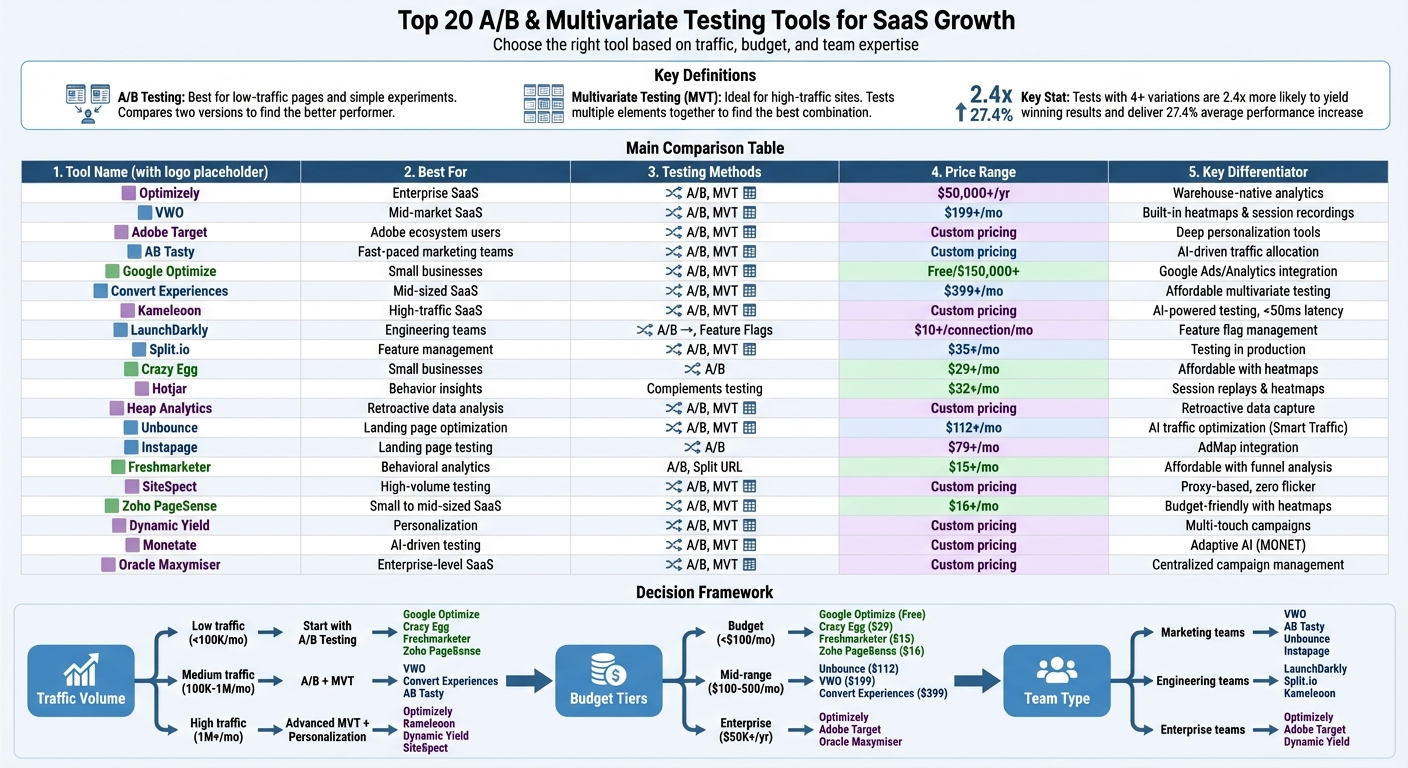 :::
:::
1. Optimizely
Testing Methodology (Multivariate vs. A/B)
Optimizely offers both A/B and multivariate testing using partial factorial testing, which helps identify positive changes early while halting underperforming combinations [3]. This approach allows you to achieve statistical significance faster, saving valuable traffic from being wasted on ineffective variations.
Here’s a key takeaway: 77% of experiments are simple A/B tests, but tests with four or more variations are 2.4 times more likely to yield a winning result and deliver an average 27.4% increase in performance [9]. Keep in mind that multivariate testing (MVT) requires a higher volume of traffic to work effectively. Optimizely’s methodology ensures efficient and scalable testing, making it a strong choice for SaaS businesses looking to grow.
Scalability for SaaS Growth
Optimizely’s Edge Delivery feature processes experiments at the CDN level, eliminating issues like page flicker and latency that can negatively impact conversions at scale [8]. Additionally, its warehouse-native analytics integrates seamlessly with data platforms like Snowflake, BigQuery, Databricks, and Redshift, removing the need for manual data exports [6].
For example, in 2024, Cox Automotive used Optimizely to run experiments across more than 10 brands, including Kelley Blue Book. Under the leadership of Sr. Director of Product Analytics Sabrina Ho, the team reduced analysis time from weeks to hours and boosted their experimentation program’s health score by 27% in just one quarter [6]. Similarly, oral care brand quip reported launching A/B tests 40 times faster after adopting Optimizely Web Experimentation, according to Timothy P, Director of Digital Product [6]. These features make it easier to manage large-scale testing while improving overall performance.
Ease of Experimentation and Analysis
Optimizely simplifies the experimentation process with a visual editor that allows users to create test variations without writing code. It also employs AI-powered agents, like Opal, to assist with tasks such as experiment planning, ideation, and summarizing results [6][8]. For statistical accuracy, the platform uses a Sequential Engine to track results in real time without increasing false positives, and CUPED (Controlled-experiment using pre-experiment data) to reduce variance and speed up significance [6][9].
A standout example is Brooks Running, which leveraged Optimizely’s personalization features to combine sizing recommendations with their business data. This effort led to an 80% reduction in product return rates by addressing the issue of customers ordering multiple sizes. Additionally, the platform’s multi-armed bandit functionality automatically directs more traffic to successful variations during tests, maximizing conversions in real time [6][8][9].
Integration Capabilities with Other Tools
Optimizely integrates with over 65 third-party analytics platforms, including Segment, Mixpanel, Salesforce, Amplitude, and Google Analytics. Its feature flags enable progressive rollouts and instant rollbacks, making it easier to manage feature updates [12][6]. The warehouse-native approach allows teams to monitor key metrics directly within their experiments. One team shared:
"We define our own sessions, and we define our own metrics. Everything already sits in our warehouse as a single source of truth." [6]
These integrations are especially valuable for SaaS companies aiming to refine user experiences and drive growth. However, pricing is typically custom and may be steep for smaller businesses. Some users have also noted that mastering advanced features can come with a learning curve [10][13].
2. VWO (Visual Website Optimizer)
Testing Methodology (Multivariate vs. A/B)
VWO distinguishes between two primary testing approaches: A/B testing, which compares versions of a single element, and multivariate testing, which evaluates multiple elements simultaneously to understand their combined impact on performance [14][1]. To deliver faster, probability-based insights, VWO employs its Bayesian statistical engine, SmartStats, which outpaces traditional methods [7][15].
For multivariate testing, VWO suggests using the Full Factorial method, which divides traffic equally among all possible combinations of variables. For websites with lower traffic, it supports Fractional Factorial testing as a more efficient alternative [1]. In practice, multivariate testing is ideal for refining page elements, while A/B testing is better suited for identifying major design improvements [1].
A great example of this in action comes from 2025, when Microsoft Office experimented with different combinations of hero images, titles, and CTAs. Their efforts led to a 40% boost in conversions compared to their original design [17]. This showcases the platform's ability to drive meaningful results for businesses.
Scalability for SaaS Growth
VWO's infrastructure is built to handle the demands of growing SaaS businesses. It supports unlimited concurrent campaigns, variations, account users, and metrics, ensuring scalability as testing needs expand [20][16]. Running on the Google Cloud Platform and leveraging dynamic CDN technology, VWO processes billions of requests daily with 100% uptime, while its asynchronous SmartCode minimizes any impact on page load speeds - even during complex tests [20][19].
In January 2026, VWO merged with AB Tasty, creating a $100+ million digital experience optimization company that now serves over 4,000 customers worldwide [21]. For SaaS, the platform has proven its effectiveness. For instance, in 2025, POSist conducted Split URL tests over four months, achieving a 50% growth in organic leads and a 52% rise in demo requests under the guidance of Cofounder and CEO Ashish Tulsian [19].
Ease of Experimentation and Analysis
VWO simplifies the testing process with its Visual Editor, which allows users to create A/B and multivariate variations without writing code. Features like real-time editing and AI-powered text recommendations through VWO Copilot make it easy to experiment and optimize [7][15]. The platform can even generate and test hundreds of variations automatically [15][19]. To ensure everything runs smoothly, Live Previews and Traffic Simulation tools help verify that variations render correctly across different browsers before launch [15].
A compelling example comes from Provident Hotels & Resorts, which collaborated with Sabre Hospitality Solutions to test three form title variations and four CTA text options. This experiment, involving 27,500 visitors over a month, resulted in a 9.1% increase in click-through rates [15]. Additionally, VWO’s guardrail metrics monitor critical business KPIs, pausing tests or issuing alerts if negative impacts are detected [19][7].
Integration Capabilities with Other Tools
VWO seamlessly integrates with a variety of tools to enhance its functionality. For instance, it connects with Salesforce to push campaign data directly into CRM records, enabling teams to track how specific experiment variations influence conversion rates [18]. It also integrates with platforms like ClearBit, 6sense, and Demandbase for account-based experiences, while connections with GA4, Mixpanel, and Segment provide deeper analytics insights [18][19].
In 2025, Human Interest's Growth Product Manager, Nijanth Velmanikandan, leveraged the VWO–Contentful integration to streamline lead form experiments without relying on engineering resources. This effort drove a 75.84% increase in lead form conversion rates [19]. Paulius Zajanckauskas, Web Growth Lead at Omnisend, shared his perspective:
"Its seamless integrations with GA4 and Mixpanel help us connect experiment data with onboarding and product usage insights. The visual editor, goal tracking, and audience segmentation features make it easy to align tests with our KPIs." [19]
For more advanced use cases, VWO offers webhooks, APIs (with a generous limit of 60,000 requests per month), and SDKs in over eight programming languages, supporting server-side testing and custom event tracking [16][7][19]. To top it off, VWO provides a 30-day full-featured free trial - no credit card required [14][15]. These integrations and features make it a powerful tool for SaaS companies looking to refine their growth strategies.
3. Adobe Target
Testing Methodology (Multivariate vs. A/B)
Adobe Target employs both A/B testing and multivariate testing (MVT) to optimize content and user experiences. A/B testing focuses on comparing two or more versions of content to identify which one drives higher conversions. On the other hand, MVT evaluates various combinations of elements on a page to determine which combination performs best. It analyzes the main effect (which individual element has the most impact) and the interaction effect (how elements work together). Adobe Target suggests starting with MVT to identify high-impact areas and then refining those areas with A/B testing. For example, testing three locations with three different content options results in 27 combinations to analyze [23].
To complement manual testing, Adobe Target incorporates AI-powered tools like Auto-Allocate and Auto-Target. Auto-Allocate uses a multi-armed bandit approach to dynamically direct traffic toward the best-performing experiences, adjusting as often as every two hours to capture trends, such as during Black Friday sales [22]. Meanwhile, Auto-Target uses machine learning to deliver personalized content to users. These features enhance optimization efforts, and an IDC report highlights that Adobe Target achieved an impressive 651% ROI over three years [24].
Scalability for SaaS Growth
Adobe Target is designed to handle experimentation across a wide variety of platforms and environments. It supports mobile SDKs, server-side APIs, and Node.js, allowing SaaS companies to test both front-end and back-end changes. Its cross-channel profiles ensure a unified testing experience across websites, mobile apps, and single-page applications.
For sites with lower traffic, Adobe Target utilizes the Taguchi Method to minimize the number of test combinations while maintaining accuracy. Additionally, enterprise-friendly features like user permissions, workspaces, and multi-environment management make it easier for organizations to maintain control and coordination. By leveraging advanced segmentation capabilities, Adobe Target can boost engagement by over 125% and enables the creation of more than 70 new audience segments [25].
Ease of Experimentation and Analysis
Adobe Target simplifies the process of creating and analyzing tests, making it accessible even to those without technical expertise. Its Visual Experience Composer (VEC) allows marketers to set up experiments without needing to write code. A guided three-step workflow further streamlines the process of launching A/B and multivariate tests. To assist users in navigating its features, Adobe’s AI Assistant, integrated into the Adobe Experience Platform, provides helpful guidance to maximize testing outcomes.
For deeper insights, Adobe Target integrates with Adobe Analytics through its A4T (Analytics for Target) feature. This integration provides advanced reporting tools that go beyond basic metrics, helping teams better understand how experiments influence user behavior and overall business performance.
Integration Capabilities with Other Tools
Adobe Target’s seamless integration with Adobe Experience Cloud products ensures a cohesive framework for testing and personalization. For instance, it works with Adobe Experience Manager (AEM) to incorporate Experience Fragments and Content Fragments directly into tests. The platform also connects with Adobe’s Real-time Customer Data Platform (RTCDP), enabling marketers to use unified, real-time visitor profiles for personalized content delivery.
Other integrations include Adobe Journey Optimizer for managing offers, Adobe Audience Manager for audience sharing, and Adobe Campaign for synchronized email and web personalization. Adobe Target is available in two tiers: Target Standard, which offers core A/B testing and rules-based targeting, and Target Premium, which includes advanced AI features like Automated Personalization and Recommendations. For enterprise clients, robust controls such as Enterprise User Permissions allow organizations to manage access by region, environment (development, staging, or production), or channel, making it ideal for large-scale SaaS operations.
4. AB Tasty
Testing Methodology (Multivariate vs. A/B)
AB Tasty supports both A/B and multivariate testing (MVT), catering to different needs. A/B testing works well for low-traffic situations or when testing specific ideas. On the other hand, MVT is ideal for evaluating how multiple elements interact, such as testing various combinations of page titles and visuals to determine the best mix [28][29].
To calculate MVT combinations, the platform multiplies the number of variations in each subtest [28]. To simplify the decision-making process, AB Tasty offers a virtual assistant called "Ally", which helps users decide whether to run an A/B, MVT, or Split test based on their hypothesis and available traffic [29][30]. The platform aims for a statistical significance level of 95%, advising users to continue tests until this threshold is reached [26][30]. This flexible approach supports robust testing strategies for SaaS environments.
Scalability for SaaS Growth
In January 2026, AB Tasty merged with Wingify (creators of VWO) under Everstone Capital, forming a combined company with over $100 million in annual revenue, 4,000 customers worldwide, and nearly 800 employees across 11 offices [21]. This merger highlights the growing demand for comprehensive digital experience platforms.
AB Tasty enables SaaS companies to scale their testing efforts through server-side testing using agnostic APIs and SDKs. This allows teams to test backend logic, such as algorithms or pricing models, across web platforms, mobile apps, and IoT devices without affecting performance [34][35]. Additionally, feature flags make it possible to release new features to specific user groups and update apps in real time, bypassing app store delays [26]. The AI-powered assistant "Evi" automates hypothesis creation and reporting, allowing teams to increase testing volume without adding more manual effort [34]. These tools help SaaS companies iterate faster and drive growth while streamlining their experimentation processes.
Ease of Experimentation and Analysis
AB Tasty simplifies the testing process by offering both client-side testing for front-end changes (which requires minimal technical expertise) and server-side testing for backend updates that involve developers [26][27]. Built-in QA tools ensure targeting, tracking, and changes are verified before implementation [28][30].
The platform encourages users to create clear hypotheses for every test [28][30]. For more detailed insights, AB Tasty integrates with tools like Contentsquare, which adds qualitative data - such as heatmaps and session replays - to complement quantitative results [31].
"The advantage of Contentsquare's A/B test technology is that editing a running test and pushing it to production is easy and immediate." - Francois Duprat, Chief Technology and Product Officer, AB Tasty [31]
Integration Capabilities with Other Tools
AB Tasty offers an agnostic API and SDK, enabling developers to create custom integrations and optimize workflows across multiple platforms [32][33]. With its "Custom pull" feature, audience data from third-party solutions can be imported to improve targeting precision [32]. During campaign setup, users can link external tools to automatically send test data to analytics or marketing platforms [28][30].
The platform’s ability to support custom integrations and precise audience targeting has led to measurable improvements in conversion rates for many brands. Serving over 1,000 clients, AB Tasty has become a key player in helping SaaS companies achieve their growth goals [26][33].
"The decision to switch to AB Tasty came down to the overall return on investment. AB Tasty offered us a solution that meets our needs at a competitive price. The implementation was easy, running experiments can be done efficiently." - Paul Branco, Sr. Director of Product Management, UX, & Analytics [33]
5. Google Optimize
Testing Methodology (Multivariate vs. A/B)
Google Optimize provides both A/B testing and multivariate testing (MVT), giving users the flexibility to choose based on their website traffic and specific goals. With A/B testing, traffic is evenly divided between a control page (A) and a variant (B) to identify which version performs better, all while testing a single hypothesis [36]. In contrast, MVT allows you to experiment with multiple elements on a single page - like headings, images, or buttons - and tests all possible combinations at once to determine the best overall design [37].
The platform includes a WYSIWYG editor, making it easy to tweak text, colors, and layouts without needing coding skills [36][37]. Experiments can also be tailored by factors like geography, user behavior, or specific events using the Data Layer [37]. Google Optimize determines results based on metrics and considers a test reliable when a variant achieves a 95% probability of outperforming the baseline [36].
However, the traffic demands for these methods vary. A/B testing is better suited for low-traffic pages since MVT divides traffic into smaller segments, which can slow down the process of reaching statistical significance. Multivariate testing, on the other hand, requires a much higher volume of traffic to produce reliable results [38]. Both methods provide the foundation for running scalable experiments, which are critical for growing SaaS businesses.
Scalability for SaaS Growth
Google Optimize offers a free version that supports basic A/B testing, multivariate testing, and personalization features. However, this version limits users to running up to three simultaneous experiments or objectives [36][37]. For businesses with greater needs, Google Optimize 360 - the enterprise version - offers more robust capabilities, such as advanced targeting, expanded multivariate options, and the ability to run multiple experiments at once [37][11].
This platform works across both websites and mobile apps using client-side technology [11]. Personalization features within Google Optimize have demonstrated impressive results, with users becoming up to 32 times more likely to convert [36]. Additionally, 75% of the top 500 e-commerce companies rely on testing variations to optimize their marketing content [38].
Integration Capabilities with Other Tools
Google Optimize integrates seamlessly with Google Analytics, making it easy to track experiment outcomes and analyze performance through specific Optimize dimensions within the Analytics dashboard. It also connects with Google Ads, enabling precise targeting based on campaigns, ad groups, or specific keywords. For those using third-party systems like CRMs, the platform supports integration via the Google Analytics Admin API and Audience List API, allowing businesses to import user identifiers from Analytics and match them with internal systems for enhanced targeting.
When setting up objectives in Google Optimize, users can choose from existing Google Analytics goals or create custom event tracking to measure success effectively. Google Analytics even allows for comparing results from up to four experiments side by side [39]. To ensure a smooth user experience and avoid page flicker, it’s recommended to install the anti-flicker snippet directly in the on-page code rather than relying solely on Google Tag Manager.
6. Convert Experiences
Testing Methodology (Multivariate vs. A/B)
Convert Experiences offers both A/B and multivariate testing to help businesses optimize their websites and campaigns. A/B testing compares an original version with one or more variations, making it perfect for testing small changes, especially when traffic is limited. On the other hand, multivariate testing (MVT) uses a full factorial design to test every possible combination of multiple variables. For example, testing two headlines, two images, and two buttons would generate eight unique combinations [43].
Tests can be created using either a visual editor or a code editor. The platform's SmartInsert technology ensures a smooth user experience by switching variations in just 200–300ms during the first page load, eliminating flicker issues [40][41]. Users can analyze test results using Frequentist, Bayesian, or Sequential Frequentist statistical models.
Real-world examples showcase the platform's effectiveness. HawkHost improved sales by 204% through multivariate testing of hero images, subheadings, and calls-to-action [43]. Similarly, SplitBase achieved a 27% increase in conversions by running a targeted headline A/B test [43]. These tools provide SaaS companies with the means to refine their strategies and scale effectively.
Scalability for SaaS Growth
Convert Experiences uses a "Monthly Tested Users" (MTU) pricing model, where each visitor is counted only once per month, regardless of how many experiments they participate in. Plans are structured to meet different needs:
- The Growth Plan starts at $399 per month and includes A/B and split testing.
- The Pro Plan adds multivariate testing and full-stack experimentation.
- The Enterprise Plan is custom-priced and includes advanced features like Bring Your Own ID (BYOID) and data segregation [40][42][44].
"Convert keeps rolling out new features, almost all of which are available to every plan tier." - Kathryn Mueller, ROI Revolution [41]
The platform has a proven track record. For example, Earth Class Mail partnered with Conversion Rate Experts to implement research-driven testing using Convert Experiences, which resulted in a 57% increase in leads and an additional $1.5 million in revenue [41]. With over 15 years of experience and optimization for 40,000+ sites, the platform also boasts a median support response time of just 7 minutes [41][42].
Integration Capabilities with Other Tools
Beyond robust testing and scalable pricing, Convert Experiences excels in integration. The platform connects with over 90 tools, including GA4, Hotjar, Shopify, HubSpot, and Microsoft Power BI. It also provides full-stack SDKs for JavaScript, Node.js, and React Native, making it easy to run server-side experiments and manage feature flags for SaaS development. Additionally, SaaS companies can use the REST API to send offline or server-side events, such as subscription renewals or CRM updates, to the platform [44][45].
Convert Experiences is built with compliance in mind, adhering to GDPR, CCPA, and ePrivacy standards. It uses first-party cookies and offers a cookieless mode through BYOID. The tracking snippet is lightweight at around 50kB and adds only about 100ms to page load times. To ensure accuracy, the platform includes built-in Sample Ratio Mismatch checks, addressing traffic split issues that impact 6%–10% of experiments across the industry [40][42][44].
7. Kameleoon
Testing Methodology (Multivariate vs. A/B)
Kameleoon offers a range of testing methods, including A/B, multivariate, and split testing, compatible with web, mobile, and server-side environments [46][50]. The platform employs a multi-statistical engine that incorporates Bayesian, Frequentist (Sequential), and Cuped testing methods to provide real-time results [46][50].
For multivariate testing, Kameleoon uses a full fractional factorial design, automatically generating all possible combinations across page sections [48]. Traffic allocation can be handled by "Section" for simplicity or by "Combination" to exclude unwanted pairings [47][48]. To ensure reliable results, the platform suggests a minimum of 1,000 visits per variation on high-conversion pages and up to 7,500 visits for pages with a conversion rate below 5% [47]. This comprehensive testing framework supports advanced experimentation techniques.
"Multivariate testing can be useful to understand the impact that different parts of a user experience have on conversion... We call this element contribution." - Jake Sapirstein, Head of Strategy, LiftCentro [47]
Kameleoon also features AI-powered Prompt-Based Experimentation (PBX), enabling users to create test variations with natural language commands [46][49]. For instance, Tikamoon used PBX to design a persistent "add-to-cart" banner that kept product details visible during scrolling, while Puy du Fou implemented a quick test to add an "Included" tag to eligible shows, reducing visitor uncertainty - all in under an hour [49].
Scalability for SaaS Growth
Kameleoon’s robust performance features make it ideal for SaaS companies looking to scale quickly. Its architecture uses local storage-based processing and fast SDKs to avoid performance slowdowns, even as traffic increases [49]. With a global CDN network ensuring latency below 50 ms and a lightweight 28.4KB asynchronous snippet that loads without blocking pages or causing flicker, the platform is designed for speed and reliability [49]. Over 1,000 brands currently rely on Kameleoon, which holds ISO 27001 and SOC2 certifications [49].
To navigate privacy challenges like Safari's Intelligent Tracking Prevention (ITP) and ad blockers, Kameleoon uses local storage for cookies, ensuring full traffic visibility [49][50]. For SaaS businesses with dynamic applications, the platform is "SPA-ready" and generates production-grade code for frameworks like React and Next.js [49]. Its AI agent reduces manual effort by suggesting experiments, creating test-ready variants, and analyzing results [49].
"Kameleoon makes it easy for our product managers and marketing teams to build experiments. It fits into our tech stack and our existing product release process. Developers get feature flagging and we get to experiment without taking up all their time." - Alexandre Suon, Head of Experimentation, Accor Group [13]
Integration Capabilities with Other Tools
Kameleoon complements its testing and scalability features with extensive integration options. It offers bidirectional integration with leading data warehouses like BigQuery, Snowflake, and Databricks, enabling advanced targeting and reporting [46][49]. The platform also connects seamlessly with CDPs and analytics tools such as Mixpanel, Amplitude, Snowplow, GA4, and Segment [51][49]. These integrations ensure that experimentation data feeds directly into your analytics workflows.
With over a dozen SDKs available for Web (React, JS), Mobile (iOS, Android, Flutter), and Backend (Node.js, Python, Java, .NET), Kameleoon supports a wide range of environments [46][51]. Its API-first design includes REST and JS APIs, allowing for smooth experiment management and flicker-free implementation [51]. Additionally, the platform’s hybrid approach combines client-side JavaScript with server-side SDKs, ensuring synchronization of experimentation data across the entire tech stack [51][50]. Built-in Sample Ratio Mismatch (SRM) detection safeguards data accuracy during high-traffic experiments [49][50].
8. LaunchDarkly
Testing Methodology (Multivariate vs. A/B)
LaunchDarkly offers robust experimentation capabilities, including standard A/B and A/B/n testing through feature flags [53]. This means you can test multiple variations of a feature - like button colors or search algorithms - against a control group all at once. For SaaS companies aiming for growth, the platform’s multi-armed bandit approach automatically shifts traffic toward the best-performing variations in real time [57][58].
When it comes to statistical analysis, LaunchDarkly gives you options. You can use Bayesian methods for experiments with smaller sample sizes or Frequentist methods for larger ones [56][57]. Bayesian analysis works well for tests with a few hundred participants, while Frequentist analysis is better suited for thousands [59][56]. Additionally, the platform supports experimentation with AI configurations, such as testing different language models, prompts, or parameters - all without requiring new code deployments [53].
"LaunchDarkly helped to democratize the experimentation practice and bring together data, product, and engineering teams working together around the same project." - David Tieba, Head of Product Analytics [53]
Next, let’s explore how LaunchDarkly’s infrastructure supports scaling SaaS operations.
Scalability for SaaS Growth
LaunchDarkly processes over 42 trillion feature flag evaluations daily, guarantees 99.99% uptime, and delivers decisions with sub-200ms latency [53]. Its Layers feature ensures mutually exclusive experiments, preventing overlap between tests [59][56]. Another useful tool is holdout groups, where a portion of your audience is excluded from all experiments. This allows you to measure the long-term impact of your experimentation program [59][56][57].
In 2024, Gamma, an AI-powered presentation platform, used LaunchDarkly’s integration with Snowflake to assess the impact of new AI features. By combining experiment data with their internal business metrics, Gamma saw a 20% increase in paid subscriptions [58]. The platform’s Relay Proxy (version 8+) ensures that even in high-traffic environments, event delivery remains efficient and experimentation doesn’t slow down application performance [57].
"Now that we can join our LaunchDarkly experiments to our Snowflake data, we can measure real user and business outcomes. We can take bigger risks in the kinds of AI features we build, and we can validate that they're worth it because we can see downstream impacts all the way through." - Jon Noronha, Co-founder and Chief Product Officer, Gamma [58]
Integration Capabilities with Other Tools
LaunchDarkly integrates seamlessly with external data warehouses like Snowflake, allowing you to base experiments on existing business data [55][57][58]. Its extensive SDKs cater to client-side, server-side, AI, and edge environments, covering the full SaaS stack [57].
The platform supports up to 20 distinct metrics for each experiment, making it easier to track guardrail metrics and ensure that performance isn’t compromised while optimizing conversions [54][56]. For project management, LaunchDarkly integrates with tools like Jira, Trello, and Asana, helping you organize experiment roadmaps and track progress [56]. Additionally, its Data Export Experiments feature lets you export raw experiment data to third-party tools, enabling deeper analysis with specialized systems [55][57].
9. Split.io
Testing Methodology (Multivariate vs. A/B)
Split, now part of Harness, brings experimentation directly into feature management. It allows teams to move beyond simple feature toggles to conduct both A/B and multivariate tests, all within a single, unified infrastructure. This setup makes it possible to test multiple feature configurations at the same time, streamlining the process [60][61].
A key aspect of Split's approach is its emphasis on "psychological safety." This concept gives teams the confidence to make bold decisions, knowing that any negative impacts on system performance or user behavior will be flagged early through its guardrail metrics. This proactive approach supports aggressive testing without risking site stability - a practice Split calls Testing in Production (TiP) [60]. Andrew Boellstorff, Director of Digital Product & Technology at Speedway Motors, highlighted the importance of this feature:
"People would quit if we stopped using Split. The psychological safety comes up in annual reviews." [60]
The results speak for themselves. For instance, Adobe Workfront saw a 20%-40% surge in support cases during the first two weeks after code releases before adopting Split. Once Split's feature flagging and experimentation tools were implemented, those incidents dropped to nearly zero [60].
Split's architecture is built to handle these advanced testing methods while maintaining performance, even in high-traffic environments.
Scalability for SaaS Growth
Split processes feature flags locally within your application's SDK, ensuring lightning-fast response times - measured in sub-milliseconds - and efficient scaling [60]. With support for over 30 SDKs across client- and server-side environments, the platform is designed to meet the demands of growing SaaS businesses [60].
As experimentation programs expand, Split helps manage complexity by identifying inactive flags - those untouched for 30 days - and integrating with Jira to streamline cleanup tasks. Experiment results are centralized into a single source of truth, making it easier for teams to make quick, data-driven decisions and iterate on products effectively [60].
This scalability, combined with seamless integration into existing tools, positions Split as a valuable ally for SaaS growth.
Integration Capabilities with Other Tools
Split integrates effortlessly with a wide range of SaaS tools, creating a centralized hub for data and insights. It connects with platforms like Google Analytics, mParticle, Segment, and Sentry to ingest events, while exporting data to tools such as Datadog, New Relic, Sumo Logic, and Jira for further analysis [60]. This two-way data flow allows teams to trigger experiments based on user behavior and share results across functions for deeper collaboration.
The platform also supports OpenFeature for standardized feature flagging and OpenTelemetry to add feature flag context to spans, making it easier to track and analyze changes [60].
Dr. Jean Steiner, VP of Data Science at SkillShare, emphasized the value of these integrations in understanding user behavior:
"Split makes it possible to really understand how our users respond to the changes we make." [60]
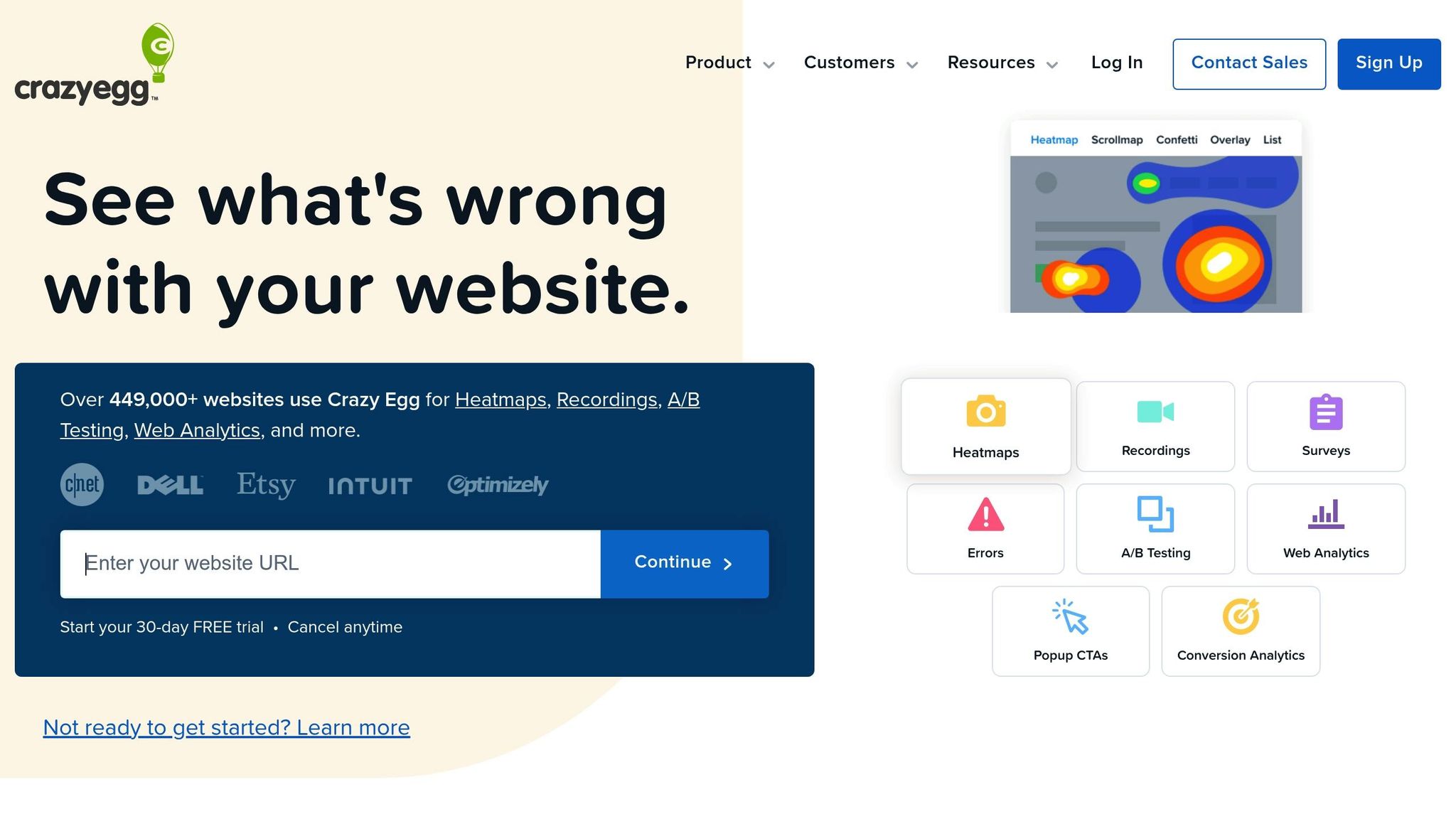
10. Crazy Egg
Testing Methodology (Multivariate vs. A/B)
Crazy Egg places a strong emphasis on A/B testing, using a Multi-Armed Bandit (MAB) approach to dynamically allocate more traffic to high-performing variants rather than sticking to a static 50/50 split [62][63].
While the platform does offer multivariate testing (MVT) for websites with significant traffic, A/B testing remains its primary focus. As Peter Lowe, Marketing and Lead Generation at Crazy Egg, explains:
"Multivariate testing isn't better or worse than AB testing. They solve different problems. You can run 90+ percent of the tests you will ever need on a website with A/B testing" [64].
For SaaS businesses, Crazy Egg recommends A/B testing for sites with at least 8,000 monthly visitors. MVT, on the other hand, is better suited for websites with traffic exceeding 100,000 visitors [64].
One standout example is Wall Monkey, an e-commerce company that achieved a 550% increase in conversion rates by leveraging Crazy Egg’s Snapshot Reports and A/B Tester [63]. Beyond testing, Crazy Egg integrates qualitative tools like heatmaps and session recordings, giving teams deeper insights into why certain variants succeed or fail [62][65]. This combination of tools makes it a powerful resource for fast experimentation, especially for SaaS companies looking to scale.
Scalability for SaaS Growth
Crazy Egg’s features are designed to support rapid experimentation and scaling, making it a practical choice for SaaS companies aiming to grow quickly. Its quick setup process ensures users can launch tests without unnecessary technical hurdles [10]. The platform’s Visual Page Editor allows non-technical team members to make changes to text, images, and layouts without writing code, while advanced users can directly edit HTML, CSS, or JavaScript [65]. This flexibility enables teams to iterate and test efficiently.
A great example comes from TSheets by QuickBooks, which scaled its testing efforts to 20 experiments per month using Crazy Egg. Mike Loveridge, Head of Conversion Rate Optimization, shared:
"We recently scaled to 20 tests a month. Access to detailed customer data and a proven testing process transformed their conversion strategy" [62].
Loveridge’s team uncovered an issue on their pricing page where users were leaving via the header navigation - an "unintended escape hatch." They addressed this through targeted testing, improving conversions [62].
Crazy Egg’s heatmaps and click-tracking tools also provide vital qualitative data, helping teams craft effective hypotheses for testing [13]. With over 400,000 websites relying on Crazy Egg, it offers a robust set of features at a price point that works for businesses seeking more advanced insights without the expense of enterprise-level tools [13][66].
Integration Capabilities with Other Tools
Crazy Egg also excels in its ability to integrate with other platforms, simplifying workflows and enhancing data analysis. It offers native integration with Google Analytics 4 (GA4), making it easier to track and analyze test performance [66]. Additionally, Crazy Egg connects with a variety of analytics tools, CMSs, and CRMs. For those needing more customization, API and SDK access are available to automate processes and tailor workflows [66].
11. Hotjar
Testing Methodology (Multivariate vs. A/B)
Hotjar, now part of Contentsquare, doesn’t directly conduct A/B or multivariate tests. Instead, it focuses on explaining user behavior during these tests through tools like heatmaps, session replays, and feedback widgets [69][72].
It integrates seamlessly with testing platforms like Optimizely, VWO, and AB Tasty, enabling a complementary workflow. For instance, Electrolux used session replays to uncover issues with their search bar. They then redesigned it and ran an A/B test, which led to a 28.6% increase in purchase path conversions and a 70% jump in lead conversions between Q1 and Q4 [72].
When it comes to multivariate testing (MVT), Hotjar helps teams focus on the most critical elements by highlighting rage clicks and underutilized features through heatmaps. This approach ensures resources are spent wisely before committing to a full-scale MVT. Since MVT involves testing multiple page variations at once, it demands a high volume of traffic - often exceeding 100,000 monthly visitors - to achieve statistical significance [68]. By identifying key variables early on, Hotjar sets the stage for more effective testing as your user base grows.
Scalability for SaaS Growth
Hotjar is built to handle environments with up to 7 million users [73]. One standout feature, Frustration Scoring, automatically flags sessions where users encounter the most friction, saving teams countless hours of manual review [70]. For example, Materials Market used this feature to analyze heatmaps and recordings, tripling their conversion rate from 0.5% to 1.6% in just one month [73].
Craig Harris, Head of Performance Analytics at Clarks, highlighted the tool’s impact on efficiency:
"To get that level of insight and to drive that many beneficial tests we'd really need another 3 full time members of staff, but by using Contentsquare we can drive insights across the whole digital team" [71].
Additionally, Hotjar’s Journey Analysis tool provides a detailed view of customer paths, pinpointing where users drop off. These insights help SaaS teams refine multi-step conversion processes using proven conversion rate optimization strategies. For example, RingCentral used this feature to optimize lead capture forms, leading to a 25% increase in conversions [71].
Integration Capabilities with Other Tools
Hotjar enhances its investigative power by integrating with 24 major analytics and CRM platforms, including Google Analytics, Adobe Analytics, Slack, and HubSpot [74]. Its bi-directional integration with testing tools allows teams to filter session replays by specific test variants, offering a deeper understanding of user behavior [72].
Sheena Green, Director of eCommerce at Ultra Mobile, explained how these integrations improved their testing approach:
"With the Optimizely integration with Contentsquare, we're able to take a losing A/B test and see why it lost - maybe there are points of friction or a minor tweak that could be made to change the outcome of the test. We're able to build and iterate the losing test, instead of starting out a square one" [72].
NatWest leveraged Journey Analysis to tackle high drop-off rates on their youth savings account page. By A/B testing a new design that replaced the hero image with specific benefit details, they successfully reduced user abandonment [72]. Hotjar also supports targeted surveys for users in specific test variants, enabling teams to gather direct feedback without disrupting the overall experience [72].
12. Heap Analytics
Testing Methodology (Multivariate vs. A/B)
Heap Analytics acts as a powerful analysis layer, gathering data from externally run tests through its addUserProperties API. For A/B testing, Heap focuses on single-variable changes - like moving a button or tweaking a homepage tagline - to measure their impact on metrics such as signups or user engagement. On the other hand, multivariate testing allows Heap to track multiple experiment identifiers simultaneously, providing a detailed view of how users respond to different combinations of variables. Thanks to its retroactive data capture, Heap automatically logs every user interaction. This means you can analyze test results using historical data, even if you hadn’t planned the test in advance [75][77].
This capability makes Heap particularly well-suited for scaling experiments in SaaS environments that deal with complex user behaviors.
Scalability for SaaS Growth
Heap is trusted by over 10,000 companies, offering features like Account-Based Analysis that make it ideal for large-scale B2B SaaS operations. This functionality ensures that all users within a company see a consistent version of a test, while also tracking feature adoption and experiment outcomes at the organization level.
Mario Tarantino, Senior eCommerce Manager at Huel, shared how Heap has transformed their approach:
"We've ramped up A/B testing and personalization with Heap to help drive spend to best-performing products. It's hard to tell what things would've been like without Heap because we weren't tracking so much before!" [76]
Lane Zimmerman, a Product Manager, also praised Heap's ease of use:
"With Heap, installation takes only a half-day, allowing me to independently answer questions from that point on." [77]
Heap’s Autocapture technology automatically logs every user click and pageview, eliminating the need for manual tagging. Combined with its Illuminate data science layer, which identifies hidden friction points in test variations, Heap helps reduce common engineering roadblocks [77][78][79].
Integration Capabilities with Other Tools
Heap doesn’t just stop at testing and scalability - it also excels in integrations. It works seamlessly with top testing platforms like Optimizely X, VWO, Oracle Maxymiser, AB Tasty, Kameleoon, and LaunchDarkly. Additionally, it integrates with CRMs like Salesforce and HubSpot, marketing tools such as Braze and Marketo, and onboarding solutions like Appcues and Chameleon. These integrations allow you to link experiment results with broader customer lifecycle data. For example, you can filter behavioral charts by "Experiment Variation" to see how a specific test affects long-term feature adoption [75][80].
Alexandre Suon, Head of Experimentation at Accor Group, highlighted this advantage:
"Heap makes it easy for our product managers and marketing teams to build experiments. It fits into our tech stack and our existing product release process." [13]
Heap’s Session Replay feature adds another layer of insight by providing video recordings of users in specific test groups. Bill Farrell, Director of Product at HelloSign, emphasized this benefit:
"With Mixpanel, there's a cost built into managing tracking code... Heap allows my entire team to be data-driven without the hassle." [77]
sbb-itb-0499eb9
13. Unbounce
Testing Methodology (Multivariate vs. A/B)
Unbounce makes it simple to test and optimize your landing pages, pop-ups, and sticky bars - all without writing a single line of code. With its built-in support for both A/B and multivariate testing, this platform offers a flexible testing environment for marketers looking to refine their strategies [81][85]. It provides three testing modes: Standard Mode for single variants, A/B Test Mode for manual traffic distribution, and Smart Traffic, which leverages AI to optimize results [81].
For A/B testing, you can easily duplicate existing variants to explore changes like tweaking button colors or adjusting the copy. Multivariate testing, on the other hand, allows you to create three or more variants to test multiple elements simultaneously, splitting traffic across each version [81][83][85]. Unbounce even includes built-in confidence metrics, so you’ll know exactly when your results are statistically significant - no guesswork required [84].
Here’s an example of its effectiveness: In May 2024, the online travel company Going saw a 104% increase in conversions simply by using Unbounce to test a three-word change in their call-to-action phrasing [82][86].
"Unbounce is my ultimate tool for A/B testing and quick-to-market landing pages." - Justin Radford, Print Production Coordinator at PDW Inc. [82]
These testing tools make it easier to scale your optimization efforts with confidence.
Scalability for SaaS Growth
Unbounce takes optimization to the next level with its Smart Traffic feature. This AI-powered tool analyzes visitor attributes - like device type, location, and browser - and automatically sends each visitor to the variant most likely to convert [83]. It kicks in after just 50 visits and has been shown to boost sales and sign-ups by an average of 30% [83][85]. By making real-time, data-driven adjustments, this feature helps SaaS companies maximize their growth potential.
Unbounce also offers unlimited A/B tests and page variants on its plans, which start at $112 per month when billed annually [82][85]. For SaaS businesses looking to personalize their landing pages, the Dynamic Text Replacement feature is a game-changer. It tailors page content based on user search terms or location, eliminating the need to create multiple pages [84].
"Unbounce allows us to quickly turn around landing pages and run A/B tests without having to pull a developer onto a project." - Matt Gardner, Director of Customer Success at RouteThis [82]
Integration Capabilities with Other Tools
Unbounce integrates seamlessly with a variety of marketing and CRM tools, including Google Analytics 4, Salesforce, HubSpot, Zapier, Stripe, Mailchimp, and Hotjar [81][85]. It also features built-in SEO safety checks, ensuring that your testing experiments won’t negatively impact your search engine performance [85].
"Unbounce allows you to easily A/B test different variations of landing pages and has strong analytics features." - Jesse Fröhling, Digital Marketing Manager at Convoso [82]
With real-time reporting and clear confidence indicators, Unbounce empowers marketers to track and refine their experiments effectively.
14. Instapage
Testing Methodology (Multivariate vs. A/B)
Instapage leans heavily on A/B testing to deliver faster insights, especially for businesses with lower traffic. Unlike multivariate testing, which demands a larger sample size to achieve statistical significance, A/B testing provides actionable results more quickly and efficiently for most SaaS companies [88].
The platform’s AI Experiments feature takes things further by automating traffic distribution to the best-performing variations [89]. Additionally, Instapage employs server-side testing, which eliminates flicker effects and ensures fast page loads - key factors in maintaining high conversion rates [90].
Consider this example: AliveCor ran an A/B test on its product pages to see if adding a "New" badge would increase engagement. The result? A 25.17% jump in conversion rate and a 29.58% boost in revenue per user across both desktop and mobile [88]. Similarly, Groove tested a "copy-first" layout that focused on benefits rather than features, and their landing page conversion rate improved from 2.3% to 4.3% [88].
By focusing on efficient testing methods, Instapage ensures SaaS companies can scale their experimentation efforts without missing a beat.
Scalability for SaaS Growth
Scaling is critical for SaaS success, and Instapage makes it seamless. The Global Blocks feature allows users to update branding, CTAs, or successful variations across thousands of pages with just one click [89]. This is a game-changer for companies managing large-scale campaigns.
Instapage’s AdMap® technology offers a visual map of your ad campaigns - including Google, Facebook, and Display ads - directly linking each ad to its corresponding landing page [91]. This tailored approach to landing pages has been shown to increase conversions by 34% while cutting acquisition costs [89].
"If we have to wait on a developer, our creative velocity plummets. But Instapage has made it possible for us to exponentially grow our advertising programs and convert more customers." - Alex Kracov, Head of Marketing [89]
Ease of Experimentation and Analysis
With Instapage, testing and analysis are made simple. Built-in heatmaps help track user behavior and pinpoint friction points before tests even go live, often with the help of a conversion rate optimization consultant [91]. The platform’s real-time dashboard and AI-generated page variations speed up the process, allowing users to create and deploy tests faster. Pricing starts at $79/month, and there’s a 14-day free trial to get started [90].
On top of that, Instapage integrates seamlessly with other tools to further streamline testing and decision-making.
Integration Capabilities with Other Tools
Instapage connects with over 120 SaaS applications, including major CRMs, email marketing platforms, and analytics tools. This ensures that conversion data and lead information syncs across your entire marketing stack in real time [91]. By simplifying data flow, marketers can make quicker, more informed decisions to fuel growth.
"Instapage gives us the ability to tailor our landing page content and layout to tell a unique story for each geographical target." - Tamar Friedland, Sr. Director of Global Paid Marketing [89]
Many users highlight how Instapage enables them to scale advertising programs without relying on developers, making it a favorite for teams looking to boost efficiency and results.
15. Freshmarketer
Testing Methodology (A/B Testing & Split URL Testing)
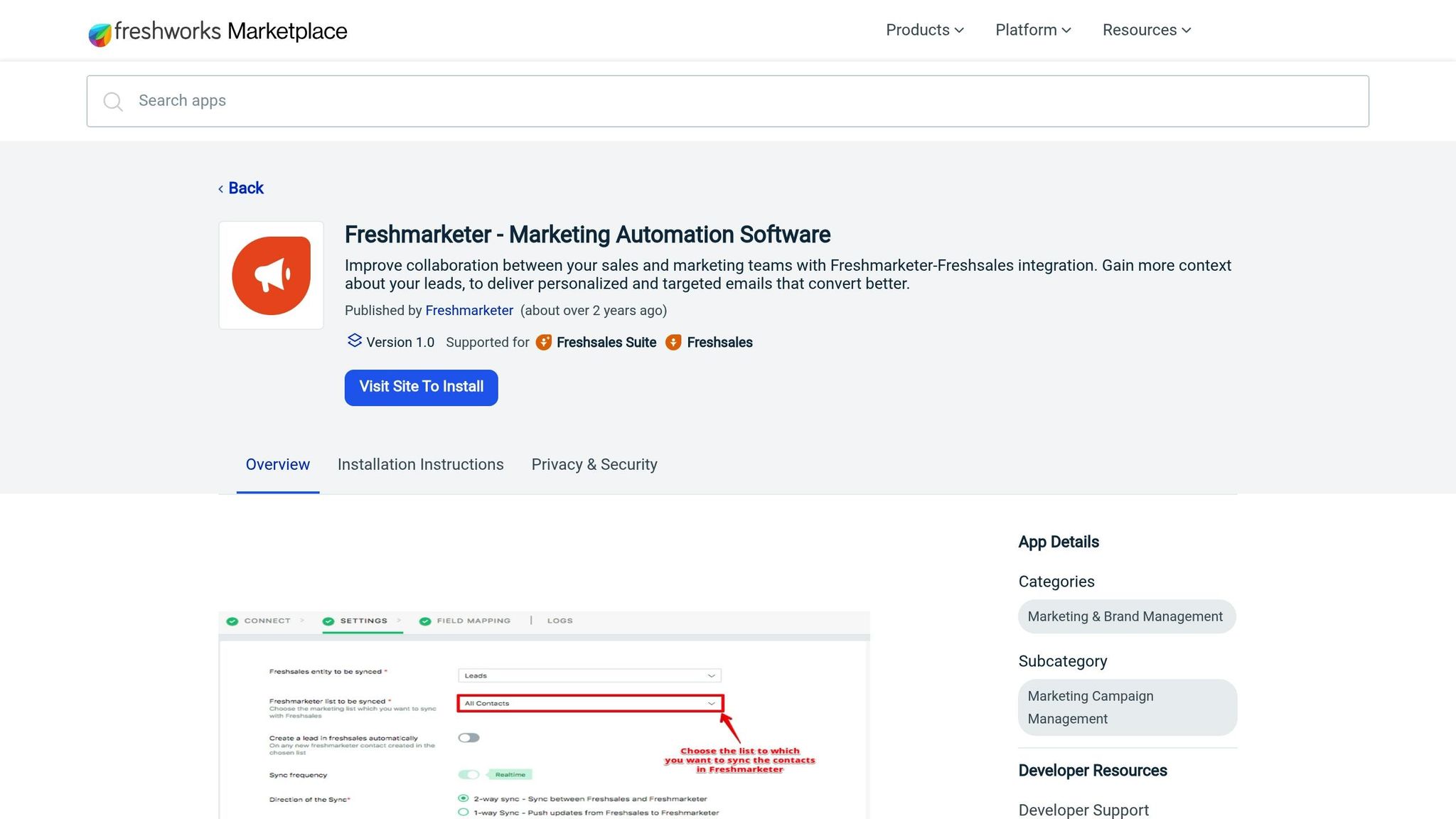
Freshmarketer offers both A/B and Split URL testing through its Conversion Rate Optimization add-on [93]. With this feature, you can create multiple versions of a webpage at the same time to figure out which one performs better in terms of conversions [92]. A/B testing works well for tweaking small elements like button colors or headline text, while Split URL testing allows you to compare a control page with entirely different designs hosted on separate URLs. This flexibility gives SaaS teams the tools they need to experiment and refine their approach effectively.
Scalability for SaaS Growth
Freshmarketer grows alongside your business using its AI-powered Freddy AI, which helps teams launch personalized campaigns up to 10 times faster. From one interface, you can connect with customers across various channels, including email, SMS, WhatsApp, and social media. With over 74,000 businesses relying on it, Freshmarketer also provides 1,000+ integrations and a seamless onboarding process that transfers contacts and historical data without any extra fees [96].
"We started using Freshmarketer for our email newsletter, and we saw the open rates increase from 19% to 46% and the click rates increase from 1.6% to 5%. This led to an increase in our website traffic and eventually attributed to a 5% increase in revenue." - Mathew K. Samuel, CEO and Global Marketing Head, NatXtra [96]
These features make it easier for teams to experiment and analyze results with confidence.
Ease of Experimentation and Analysis
Freshmarketer is packed with tools like heatmaps, clickmaps, session replays, form analytics, and funnel analysis to support your testing efforts [95]. Its visual editor and intuitive menu make it possible to set up tests quickly without needing any coding skills [94]. Pricing starts at just $15, and there's a 21-day free trial available - no credit card required [96]. To dig deeper into the "why" behind your results, the platform also includes polls and feedback tools for gathering qualitative insights during testing.
Integration Capabilities with Other Tools
Freshmarketer integrates seamlessly with major analytics platforms like Google Universal Analytics and Adobe Analytics, as well as native Freshworks tools such as Freshdesk and Freshsales. It also connects with popular landing page builders like Unbounce, WordPress, and Squarespace, giving you a complete view of visitor behavior by syncing experiment data [95]. For technical teams, its API and Webhooks make it easy to create custom integrations or trigger experiments based on specific external events [95].
16. SiteSpect
Testing Methodology (Multivariate vs. A/B)
SiteSpect offers both A/B and multivariate testing, tailoring each approach to deliver the best insights. A/B testing is ideal for comparing complete redesigns, analyzing full-funnel journeys, or when quick results are needed with limited traffic[97][101]. In this method, SiteSpect treats A/B testing as a comparison of two or more fully developed versions of an experience, even if multiple elements are adjusted.
Multivariate testing (MVT), on the other hand, shines during the discovery phase, helping to pinpoint specific elements that influence performance. SiteSpect supports both full factorial testing, which evaluates all possible combinations of elements, and fractional factorial testing, which skips less practical combinations[97][100]. Kate Orchard, Manager of Customer Success at SiteSpect, explains:
"Multivariate testing is a great way to get that initial data and narrow down your options. You can find out which elements are more likely to move the needle, so you can prioritize future tests accordingly"[97].
However, MVT demands more traffic and longer test durations to achieve statistically valid results. This careful distinction between testing methods makes SiteSpect a robust choice for scaling experiments in high-traffic SaaS environments.
Scalability for SaaS Growth
SiteSpect’s patented proxy architecture allows it to operate at a massive scale, transforming content in real time without introducing latency or causing the dreaded "flicker" effect[98][100]. With 120 billion experiences delivered and 10 trillion metrics logged, the platform supports clients managing up to 29.3 billion monthly visits[98]. Impressively, SiteSpect boasts a 97% client renewal rate, and many users report a 5-10x return on investment[98].
The platform also excels in framework-agnostic testing, supporting Single-Page Applications built with React, Angular, and Vue, ensuring seamless performance across diverse setups[100].
Ease of Experimentation and Analysis
SiteSpect simplifies experimentation with Group Sequential Testing (GST), enabling teams to review results at specific checkpoints and conclude tests early when a clear winner emerges - all while maintaining statistical validity[99]. The platform also features Sample Ratio Mismatch (SRM) alerts to flag uneven traffic splits early and uses outlier smoothing to replace extreme values with dataset averages[99].
For deeper insights, teams can integrate Real User Monitoring (RUM) metrics - like Largest Contentful Paint and Time to Interactive - into their testing data, offering a clearer picture of how site performance influences conversions[99]. Some users have reported conversion boosts of up to 70% on PPC landing pages after applying optimizations based on SiteSpect’s data[102].
Integration Capabilities with Other Tools
SiteSpect’s integration capabilities are a standout feature. It connects seamlessly with any system without relying on third-party SDKs or additional code snippets, thanks to its proxy-based engine[98][103]. The platform’s comprehensive API automates optimization workflows and integrates smoothly into existing systems[100][101].
Custom Analytics Dimensions allow teams to capture specific user metadata, such as purchased products or viewed categories, enhancing segmentation and analysis[100]. Additionally, "Origin Experiments" enable testing of infrastructure, CMS functionality, and product recommendation engines by appending parameters to request URLs - avoiding the SEO pitfalls of traditional redirects[103].
17. Zoho PageSense
Testing Methodology (Multivariate vs. A/B)
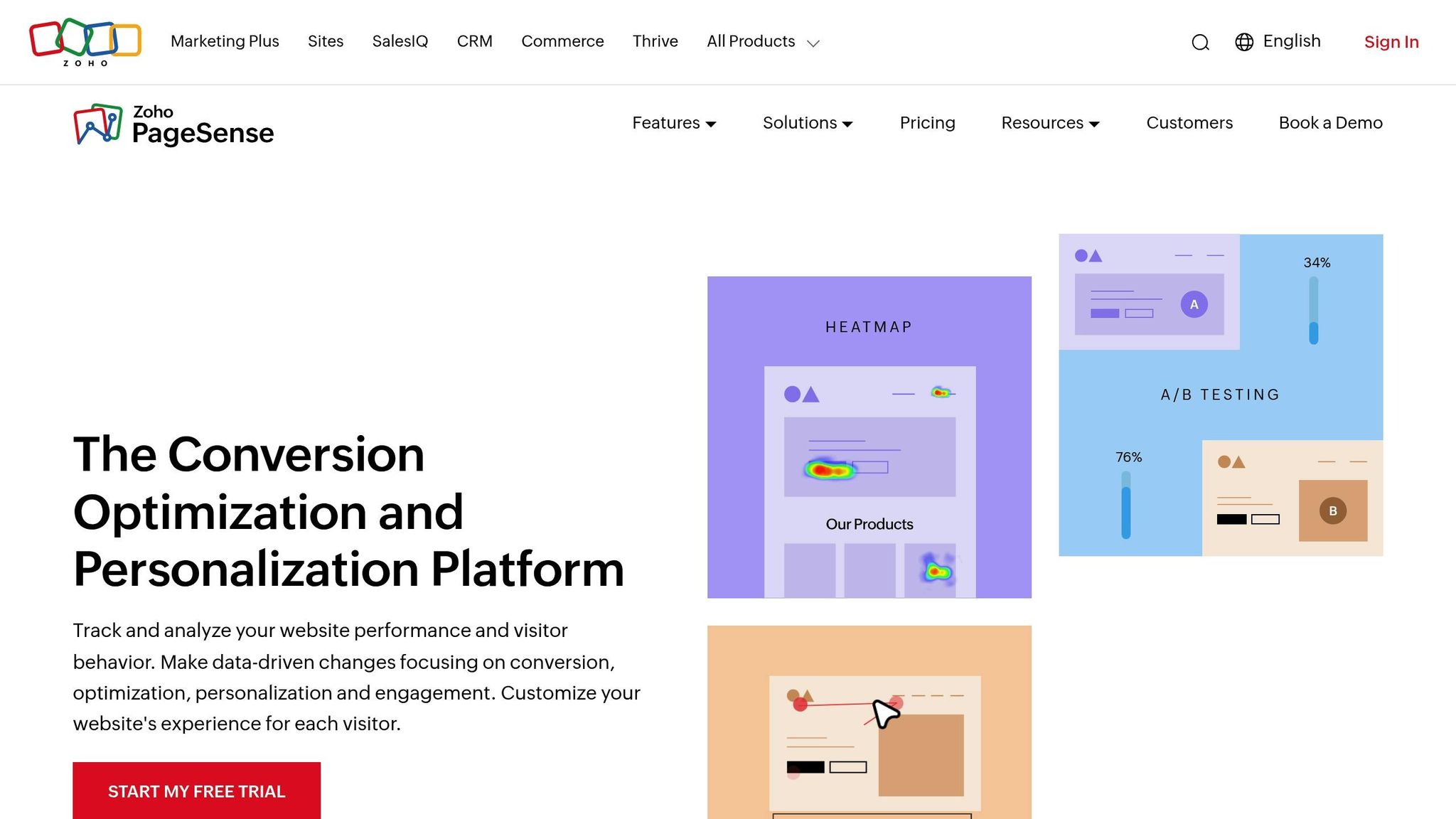
Zoho PageSense offers a variety of testing methods tailored to different needs, including A/B testing, A/B/n testing (comparing multiple variations against a control), Split URL testing for complete webpage redesigns, and Multivariate testing (MVT) for testing multiple variables simultaneously [104][106]. A/B testing is particularly effective for low-traffic scenarios and straightforward comparisons. For instance, a SaaS business testing form lengths with 500 daily visitors (around 250 per variation) could achieve 95% statistical significance in about eight days [104]. On the other hand, MVT is ideal for testing complex combinations, such as headline text, form length, and visuals, but requires higher traffic and a longer duration - typically 2–4 weeks - to account for daily fluctuations [104].
The platform supports both Bayesian and Frequentist evaluation approaches and employs a Multi-Arm Bandit system with Thompson Sampling to dynamically reallocate traffic for time-sensitive campaigns [106]. These features make it highly adaptable to the diverse testing needs of SaaS businesses.
Scalability for SaaS Growth
Zoho PageSense is designed to handle everything from small-scale experiments to enterprise-level testing, tracking over 3 million visitors daily [105][107]. Its 100% flicker-free variations ensure that tests do not impact website load times or the user experience [108]. For modern SaaS platforms, it supports Single Page Applications by managing hash and history-based URLs seamlessly. Marketers can also benefit from its visual editor and Chrome extension, which make it easy to set up tests and tweak site elements without needing IT assistance. Peep Laja, Founder and CEO of CXL and Wynter, shared his experience:
"I was impressed by how powerful yet easy to use, Zoho PageSense was. The interface was so intuitive I was able to set up an experiment right away." [108]
Pricing begins at $16/month for 10,000 visitors (billed annually) and includes a 30-day free trial that tracks up to 5,000 visitors across three projects [109][110].
Ease of Experimentation and Analysis
PageSense combines testing with behavioral analysis tools like heatmaps, session recordings, funnel analysis, and form analytics to provide deeper insights for SaaS teams [105][107]. Form analytics help pinpoint where users abandon forms, while funnel analysis offers a clear view of subscription or registration paths - critical metrics for B2B and SaaS businesses. To avoid data conflicts when running multiple tests simultaneously, the platform includes Mutually Exclusive Groups, ensuring that visitors are only part of one test at a time [104].
Integration Capabilities with Other Tools
Zoho PageSense integrates seamlessly with a variety of marketing and analytics tools, enhancing its utility. It offers single-click integrations with the Zoho suite (CRM, Sales IQ, Desk, Forms, Commerce, Sites), allowing teams to track the entire customer journey from prospect to conversion [108][109]. Additionally, it connects with platforms like Google Analytics, Mixpanel, and KISSmetrics to deliver detailed variation-specific metrics. Its integration with Google Ads enables conversion tracking and ad spend optimization. Through Zapier and Zoho Flow, teams can automate workflows with thousands of third-party apps, while an OpenAI integration helps generate copy suggestions for headlines, product descriptions, and CTAs [108][109].
Steve Woody, Director at Online Mastery, highlighted the tool's value:
"This year we cancelled our Hotjar account and now totally rely on PageSense. It's an amazing tool that has already paid for itself within the very first month." [108]
18. Dynamic Yield
Testing Methodology (Multivariate vs. A/B)
Dynamic Yield offers a variety of testing options, including A/B testing, A/B/n testing, split URL testing, and multivariate testing (MVT) [111][113]. With MVT, combinations of elements are tested simultaneously - for example, testing two headlines and two images results in four variations [113]. However, running a multivariate test with multiple layouts, colors, and headlines can take a long time to reach statistical significance [112]. Yaniv Navot, CMO at Dynamic Yield, highlights this challenge:
"I've done a lot of multivariate testing over the years, and the results have never - ever - been worth the effort." [112]
Dynamic Yield uses advanced algorithms, including Bayesian and multi-armed bandit approaches, to optimize performance and traffic allocation. Its Predictive Targeting feature further enhances A/B tests by automatically identifying opportunities for personalization [111]. These tools create a solid foundation for scaling experiments in SaaS environments.
Scalability for SaaS Growth
Dynamic Yield has generated $6.7 million in direct revenue through over 1,000 experiments for its clients and optimizes user experiences across more than 12,000 McDonald's locations [114]. The platform’s feature flags and server-side testing provide precise control for rolling out new features and managing complex backend logic [114]. Christian Ebhardt, an eCommerce and CRO Manager at Chal-Tec, shared:
"We used the Multi-Touch Campaign capabilities to drive changes and test the entire website journey for one of our key customer segments. This was all set up as a single experiment to guarantee consistency throughout the entire customer journey... we've seen great returns, with an increase of over 27% in the conversion rate." [114]
Dynamic Yield’s multi-armed bandit algorithms also dynamically shift traffic to the best-performing variations in real time, maximizing revenue during experiments [114]. For example, Tottenham Hotspur achieved a 40% boost in mobile conversion rates by applying insights from experiments to tailor layouts for specific audience segments [111].
Ease of Experimentation and Analysis
Dynamic Yield simplifies experimentation with its "What You See Is What You Get" (WYSIWYG) editor, allowing marketers to quickly launch tests [114]. The platform supports both Bayesian and Frequentist methods, giving users the flexibility to choose based on their data needs and decision-making speed [114]. Real-world results underscore its impact: Ocado saw a 55% increase in add-to-cart rates after optimizing product listing page offers [111], while Sky reported a 138% rise in click-through rates (CTR) to watch content after refining customer onboarding processes [111]. Dynamic Yield has been recognized as a Leader in the Gartner Magic Quadrant for Personalization Engines for seven consecutive years (2019–2025) and earned the title of "Enterprise AB Testing Tool of the Year" in 2024 [111].
Integration Capabilities with Other Tools
Dynamic Yield’s open architecture integrates seamlessly with major marketing platforms, including Data Management Platforms (DMPs), web analytics tools, and tag managers [111][114]. Its Experience OS brings together segmentation, targeting, and recommendations into one unified system [111][114]. The platform also supports Single-Page Applications (SPAs), enabling A/B testing and personalization without requiring extensive code changes [111][114]. With its Multi-Touch Campaigns feature, users can test and optimize entire customer journeys instead of focusing on isolated page elements. For instance, Synchrony achieved a 7% increase in credit card applications by running a series of personalization and UX experiments through Dynamic Yield [111].
19. Monetate

Testing Methodology (Multivariate vs. A/B)
Monetate's Maestro platform offers robust testing options, including A/B, A/B/n, and multivariate testing (MVT), all powered by its "MONET" adaptive AI. This AI streamlines testing cycles and automates traffic allocation to optimize results [115][118]. A/B testing works best for evaluating a single element, like a button color, or for comparing major page redesigns to identify the superior version [117]. On the other hand, multivariate testing allows you to test multiple elements - such as a headline, hero image, and call-to-action - at the same time, helping pinpoint the most effective combination [117].
The platform also includes Dynamic Testing, a real-time AI-driven feature that shifts traffic toward winning variants while reducing exposure to underperforming ones [115]. Monetate underscores the strategic value of each testing method:
"Multivariate testing can be used to make incremental changes to the overall design of a page to achieve better results... It also helps identify elements that aren't contributing to customer experience." - Monetate [117]
Multivariate testing, however, requires significantly more traffic. For instance, testing three elements with three variations each results in 27 combinations to evaluate [117]. A practical approach is to start with A/B testing during major redesigns to establish a baseline, and then use MVT to refine the winning design [117]. This strategy sets the stage for Monetate's scalability features, which are explored next.
Scalability for SaaS Growth
Monetate’s zero-flicker architecture ensures experiments run smoothly without delays or visual interruptions, even during high-traffic periods [115][118]. Beyond websites, the platform supports testing across mobile apps, email campaigns, kiosks, and call centers, allowing SaaS brands to experiment consistently throughout the customer journey [115]. With over 150 pre-configured targeting options, teams can easily segment audiences without needing custom development [115].
A real-world example: Darn Tough leveraged Monetate's tools to achieve a 12% increase in average order value (AOV) [115]. For businesses considering multivariate testing, Monetate advises reaching a data maturity level of at least 10,000 conversions or having six months of A/B testing experience [119]. Industry standards suggest that achieving statistical significance in eCommerce testing often requires a minimum of 30,000 visitors and 3,000 conversions per variant [119].
Integration Capabilities with Other Tools
Monetate integrates seamlessly with leading analytics and eCommerce platforms like Google Analytics 4 (GA4), Contentsquare, Shopify Checkout Extensibility, and AgilOne [116][120]. The platform supports data onboarding through SFTP and a Data API, enabling the import of customer attributes, product catalogs, and offline purchase data [120]. Additionally, the MONET Assistant simplifies the process of setting up experiments and interpreting results, making the platform user-friendly for business teams while still offering advanced customization options for technical users [116].
20. Oracle Maxymiser
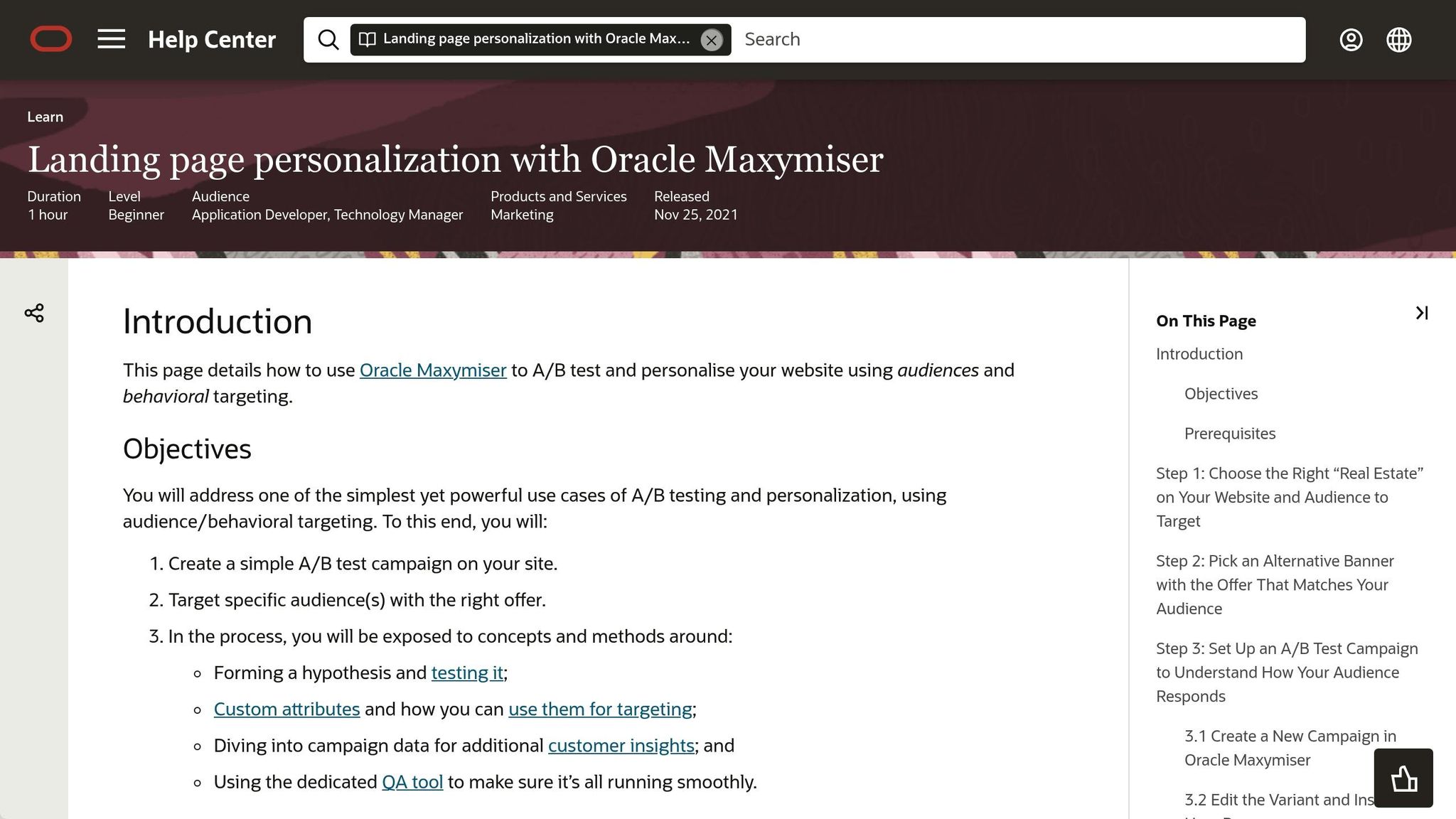
Testing Methodology (Multivariate vs. A/B)
Oracle Maxymiser supports both A/B testing and multivariate testing (MVT), giving businesses the flexibility to choose the approach that best suits their needs. A/B testing focuses on isolating a single variable to measure its impact, while MVT delves into how multiple elements interact. As Christopher Santini, Senior Consultant at Oracle Digital Experience Agency, puts it:
"MVT's greatest strength is it allows you to much more quickly and easily see how changes in various elements improve or hinder overall performance." [87]
Maxymiser employs a group sequential approach for statistical analysis, enabling tests to conclude as soon as a statistically significant result is achieved - usually at a 95% confidence level. This eliminates the need to wait for a fixed sample size [123][125]. This flexibility allows for rapid iterations on low-traffic pages and more detailed experimentation on high-traffic assets. For SaaS companies, A/B testing is ideal for lower-traffic pages or when quick iterations are necessary, while MVT shines on high-traffic pages where understanding how elements interact is crucial [87]. However, MVT can involve over 50 combinations, requiring significant traffic to yield reliable results [2].
Scalability for SaaS Growth
Maxymiser is designed with enterprise-level scalability, making it a strong choice for SaaS companies looking to grow. It features tools like a Test Duration Calculator and machine learning capabilities that automate insights and predict high-performing segments [123][121][52]. For large-scale personalization, the platform offers Standard Attributes (e.g., geolocation, technology, weather) and Custom Attributes, which can pull data from CRM systems or track specific user behaviors [123]. Its centralized campaign management ensures that large-scale experiments across multiple digital properties align seamlessly with broader enterprise strategies [52].
Ease of Experimentation and Analysis
Oracle Maxymiser simplifies experimentation with its visual Campaign Designer, allowing marketers to create test variants without needing advanced coding skills [121][123]. For technical users, a code editor is also available. The platform includes a built-in QA tool to validate targeting rules and test variants before launch, minimizing issues like the "Flash of Original Content" flicker that can distort results [121][123].
Test winners can be selected manually or automatically based on metrics like conversion rates, click-through rates, or revenue per order [122][124]. However, Reed Pankratz, Sr. Strategic Consultant at Oracle Marketing Consulting, cautions:
"Without clearly defined processes, marketers run the risk of testing just for the sake of testing, which leads to discrepancies in methodology, lack of purpose, ambiguous results, and wasted resources." [125]
Integration Capabilities with Other Tools
Oracle Maxymiser integrates seamlessly with other tools, reinforcing its enterprise focus. It works natively with Oracle Infinity for heatmaps and in-session behavioral personalization and connects with Oracle Responsys to enable multivariate testing within email campaigns [121][122][124]. The platform also uses the Oracle CX Tag, ensuring consistent deployment across web properties [121]. By leveraging Custom Attributes, teams can import visitor data from CRM systems or other external sources, enabling advanced segmentation strategies [123][2]. This level of integration ensures data consistency across the Oracle Marketing Cloud, supporting a unified SaaS ecosystem [121][52].
We Evaluated the Top A/B Testing Software Tools To Help You Decide
::: @iframe https://www.youtube.com/embed/XwaSobEAM4Y :::
Strengths and Weaknesses
Building on the earlier feature breakdowns, this section provides a clear comparison of the core strengths, weaknesses, and ideal use cases for each tool. As highlighted in the individual overviews, every testing tool has its own advantages and limitations, which play a significant role in determining its suitability for different SaaS growth strategies.
Optimizely is a standout choice for enterprise-scale experimentation, offering warehouse-native analytics that integrate directly with platforms like Snowflake, BigQuery, and Databricks [6]. However, its pricing - often exceeding $50,000 annually - can be a barrier, and it demands considerable developer support [67].
For those seeking a more accessible option, VWO provides built-in heatmaps and session recordings, making it easier for beginners to use compared to Optimizely’s steeper learning curve [67]. Still, its full-stack features might require technical assistance [126].
Adobe Target is known for its robust personalization features, but it comes with high complexity and often locks users into Adobe’s ecosystem [67].
If your focus is developer-centric feature flag management, LaunchDarkly is a strong choice, starting at $10 per service connection each month [126]. That said, it lacks a native preview function for test groups prior to launch [126].
AB Tasty leverages AI-driven dynamic allocation to shift traffic toward winning variations automatically [126]. However, users have reported occasional bugs in its editor, which can slow mobile quality assurance processes [126].
When comparing these tools further, some integrate experimentation with analytics for smoother cohort targeting, while others face challenges like slow metric updates and inconsistent statistical thresholds. For example, Amplitude combines experimentation with its analytics ecosystem, enabling cohort-based targeting without additional engineering effort [126]. Yet, users have noted delays in metric updates and variability in statistical thresholds [126]. Interestingly, an analysis of over 127,000 experiments revealed that tests with four or more variations achieve 27.4% higher uplifts compared to basic A/B tests, though 77% of experiments still rely on simple two-variation setups [9].
The table below summarizes the key strengths, weaknesses, and best-fit scenarios for each tool:
| Tool | Primary Strength | Primary Weakness | Best For |
|---|---|---|---|
| Optimizely | Warehouse-native data; enterprise scalability [6] | High cost ($50,000+); requires developer support [67] | High-velocity enterprise teams |
| VWO | All-in-one platform with behavior analytics [67] | Full-stack features may need technical help [126] | Mid-market teams seeking qualitative insights |
| Adobe Target | Deep Adobe ecosystem integration [67] | High complexity and expense; locked ecosystem [67] | Users within the Adobe Experience Cloud |
| AB Tasty | AI-driven traffic allocation; no-code editor [126] | Occasional editor bugs; challenging mobile QA [126] | Fast-paced marketing teams |
| LaunchDarkly | Superior feature flag management [126] | Lacks native preview for test groups [126] | Developer-focused teams |
| Amplitude | Integrated analytics and cohort targeting [126] | Slow metric updates; inconsistent thresholds [126] | Product teams with an existing Amplitude setup |
Cost considerations also vary based on company size. Smaller SaaS firms can benefit from budget-friendly options like Crazy Egg (starting at $29/month) or Split.io (starting at $35/month) [5][127]. For mid-market teams, platforms like Convert Experiences offer advanced multivariate testing without the hefty six-figure price tags [5]. Meanwhile, enterprise teams often find the higher costs worthwhile when personalization efforts deliver measurable results.
Conclusion
Choosing the right testing tool depends on your team's size, budget, and technical expertise. If you're a small SaaS startup with limited traffic, VWO Starter, Crazy Egg (starting at $29/month), or Hotjar are excellent no-code options. These tools let you run quick A/B tests without needing a developer’s help, making them ideal for lean teams [4]. For mid-market businesses requiring multivariate testing and personalization but without the budget for six-figure contracts, VWO Growth/Pro plans (starting around $199/month) and AB Tasty offer a great mix of power and usability [4][126].
As your testing requirements grow, enterprise-grade tools come into play. Companies running large-scale experiments often turn to Optimizely and Adobe Target, though their annual costs can range from $50,000 to over $100,000 [4]. For engineering teams managing risk-controlled rollouts, LaunchDarkly (starting at $10 per service connection monthly) is a strong choice, while Statsig provides similar capabilities at about half the cost [126][128].
Keep in mind that test complexity impacts ROI significantly. While simple two-variation A/B tests are common, experiments with four or more variations are 2.4 times more likely to succeed and deliver 27.4% higher performance gains [9]. Start with A/B testing to find your "global maximum" - the best overall design or concept. Once you've identified that, shift to multivariate testing to fine-tune specific elements for optimal results. Just ensure you have enough traffic to support multivariate testing, as it requires a larger audience. This data-driven approach lays the groundwork for a solid testing strategy [1].
"What you're actually buying is your organization's decision-making infrastructure." - Optimizely [6]
To scale effectively, it’s crucial to adopt a systematic testing framework that balances speed with quality. Studies show that running more than 30 tests per engineer annually can reduce expected impact by 87% [9]. Focus on long-term metrics like customer lifetime value and retention. Use guardrail metrics and warehouse-native platforms, such as Snowflake or BigQuery, to create a unified performance framework [6][9]. This approach ensures your testing efforts drive sustainable growth.
FAQs
::: faq
What’s the difference between A/B testing and multivariate testing?
A/B testing and multivariate testing are both effective ways to enhance user experiences, but they tackle different challenges.
A/B testing focuses on comparing two or more versions of a single element - like a webpage, email, or ad - to determine which one performs better. It’s straightforward to implement and is especially useful for testing significant changes, such as new headlines, images, or call-to-action buttons.
Multivariate testing, by contrast, evaluates multiple elements on a page at the same time to see how they work together. This approach is great for fine-tuning designs and making smaller adjustments. However, it typically requires a higher volume of traffic to produce reliable results.
To sum it up: A/B testing is perfect for quick, simple comparisons, while multivariate testing digs deeper into the details for more complex optimizations. :::
::: faq
What should I consider when choosing a testing tool for my SaaS business?
Choosing the right testing tool for your SaaS business is all about finding one that supports your goals and simplifies decision-making. These platforms let you test product changes by presenting users with different versions, gathering data on their behavior, and analyzing the results to guide your next steps. The ideal tool should streamline the entire process - from setting up experiments to interpreting the outcomes - while ensuring precision and saving you valuable time.
Prioritize tools that deliver clear, actionable insights and integrate smoothly into your existing workflow. A reliable platform will help you make confident, data-backed decisions, cutting out guesswork and enabling you to refine your product with ease. :::
::: faq
How much website traffic is needed to run effective multivariate tests?
To carry out successful multivariate tests, your website must have a large amount of traffic. This is because these tests analyze multiple combinations of elements at the same time, and a significant dataset is needed to achieve results you can trust. Without sufficient traffic, it’s tough to pinpoint which variations truly perform better.
Although there’s no fixed traffic requirement, the number of variations and elements being tested directly impacts the volume of visitors needed for reliable insights. For websites with lower traffic, sticking to simpler A/B testing might be a smarter choice until visitor numbers grow. :::
Related reading
- Top 5 SaaS Tiered Pricing Examples
- How to Run a Pricing Experiment Without Losing Customers
- 30 SaaS Pricing Experiments: Real Results on Tiers, Billing & Discounts
- Rituals vs. Processes in SaaS Growth
- top 20 brands or products that match these criteria: enterprise service-level agreements for experimentation software.
Useful tools & services
Go deeper than any blog post.
The full system behind these articles—frameworks, diagnostics, and playbooks delivered to your inbox.
No spam. Unsubscribe anytime.