"I Know What I Need to Do But I Can't Start" - The ADHD Freeze Explained
Why ADHD freeze (task paralysis) blocks starting tasks and how to break it with movement, micro-steps, decluttering, and ADHD-friendly workflows.
Feeling stuck even when you know exactly what to do? ADHD freeze, also called task paralysis, is a neurological block that makes starting tasks feel impossible - despite clear next steps. Unlike procrastination, ADHD freeze isn’t a choice, but a reaction to executive dysfunction, decision overload, or even fear of failure.
Key Takeaways:
-
What it is: ADHD freeze is an involuntary shutdown caused by executive dysfunction, not laziness or procrastination.
-
Why it happens: Triggers include unclear tasks, sensory overload, and fear of failure, often activating the fight-flight-freeze response.
-
How to break it: Simple actions like movement, breaking tasks into tiny steps, or using tools like Onsara can help.
-
Prevention tips: Plan ahead, use visual task systems, and structure your day to reduce decision fatigue.
Understanding ADHD freeze can help you manage it, improve productivity, and create better systems for long-term success.
What Causes ADHD Freeze
Executive Dysfunction and Decision Overload
At the core of ADHD freeze is executive dysfunction - a breakdown in the brain's ability to manage tasks like working memory, prioritizing, and planning. These skills are essential for handling day-to-day responsibilities, but when they falter, even simple tasks can feel impossible. Imagine trying to decide on pricing tiers, prioritize features, or respond to investor feedback while your brain struggles to filter out distractions. For someone with ADHD, irrelevant information can feel just as urgent as the task at hand, leading to mental overload [1][3]. When faced with multiple options or complex decisions, the ADHD brain may get stuck overanalyzing, unable to weigh priorities or take action.
This isn't about intelligence or ability - it's about how the brain processes information. Dopamine dysregulation impacts how rewards are perceived, while emotional dysregulation can lead to complete shutdowns [1][2][4][6][7].
These internal hurdles often collide with external pressures, making the freeze even worse.
Common Triggers of ADHD Freeze
Certain workplace factors can set off ADHD freeze. For example, unclear to-do lists can leave tasks without clear next steps, causing the brain to spiral in search of where to begin [9]. Add over-commitment to the mix, and responsibilities can quickly feel like insurmountable mountains.
Another major trigger is environmental chaos. On average, Americans face interruptions every five minutes at work, with some professions - like law - experiencing disruptions every two to three minutes [8]. The average adult checks their phone about 80 times a day, and after each interruption, it can take nearly 23 minutes to refocus [8]. For someone with ADHD, these constant disruptions don't just slow progress - they can completely derail it.
Sensory overload also plays a significant role. Open-plan offices, endless notifications, and countless browser tabs can overwhelm the brain, a phenomenon sometimes referred to as "technology-induced attention deficit trait" [8]. Even small decisions, like choosing where to sit or whether to wear headphones, can drain the limited mental energy available [10]. When multitasking is added to the equation, it creates the perfect storm for ADHD freeze [8].
Fear of failure is another powerful trigger. High-stakes situations - like launching a product or presenting to investors - can make the risk of a wrong decision feel paralyzing [1][2][7]. This fear, often paired with self-doubt and low self-esteem, can trap individuals in a cycle where being frozen further erodes their confidence [4][5][7].
These triggers can also activate a deeper biological response, setting off the fight-flight-freeze cycle.
The Fight-Flight-Freeze Response
ADHD freeze isn't just a mental block - it has a physical side too. When faced with overwhelming tasks or pressure, the brain may interpret these situations as threats, triggering the fight-flight-freeze response [11][12]. For individuals with ADHD, who already struggle with emotional regulation, this survival instinct can kick in more easily [11].
When this happens, blood flow shifts from the brain's executive prefrontal cortex (responsible for planning and reasoning) to more primitive, emotional areas [11][13]. This means the tools needed to break free - like logical thinking, working memory, and problem-solving - are temporarily out of reach. It's not a choice to be stuck; it's your brain reacting as if it's in survival mode.
This explains why ADHD freeze feels so different from procrastination. It's not about putting something off; it's about feeling completely blocked. Symptoms like brain fog, physical tension, and an overwhelming urge to avoid the task aren't signs of laziness - they're your nervous system responding to what it perceives as a threat. Understanding this difference is key to finding strategies that can actually help.
ADHD Paralysis Explained| Why You’re Stuck & How to Break Free
How to Break ADHD Freeze Right Now

Reset Your Body and Environment
Feeling stuck? Sometimes, all it takes is a little movement to shake things up. Stand up, stretch, take a quick walk, or even throw in a few jumping jacks. If you're at your desk, a simple stretch can do wonders. One person shared that a quick one-minute movement break was enough to restore their focus [14]. Another found that just standing up, moving briefly, and sitting back down worked every single time [14].
"Movement resets your brain in minutes. When your brain is frozen, it's stuck in a particular neurological state. Physical movement interrupts that pattern and creates a reset. This isn't about exercise or getting fit - instead, it's about using movement as a tool to shift your brain state." – Learn to Thrive with ADHD [14]
To keep distractions at bay, close unnecessary tabs, silence notifications, and clear any clutter around you. If sensory overload is part of the problem, try relocating to a quieter spot. Even a change of scenery, like heading to a different room or a local cafe, can help reset your focus.
Once your body feels reset, it’s time to tackle the mental side of things.
Cognitive Techniques for Starting Tasks
The hardest part of any task is often just starting. Break it down into the smallest, simplest step. For example, instead of thinking, "I need to write this report", start with "open the word processor." If cleaning the kitchen feels overwhelming, begin with something as small as putting one mug in the sink.
Another trick? Use the 5-minute rule: commit to working on a task for just five minutes. Often, that little bit of effort is enough to build momentum. You could also try the Pomodoro method - work for a set time (like 25 minutes), then take a short break. These strategies make even daunting tasks feel more manageable.
Writing things down can also help. Create a checklist, jot down the steps, or record a quick voice memo to externalize your thoughts. And don’t let perfectionism hold you back. Remember, done is better than perfect. The goal is simply to make progress, not to achieve perfection on the first try.
"Making any kind of progress is better than being stuck. Progress is valuable. Initial efforts spark momentum; you can refine them later. Progress builds momentum." – Dr. Sharon Saline's Team [15]
If these techniques still don’t break the freeze, technology might be the extra push you need.
Using Tools Like Onsara
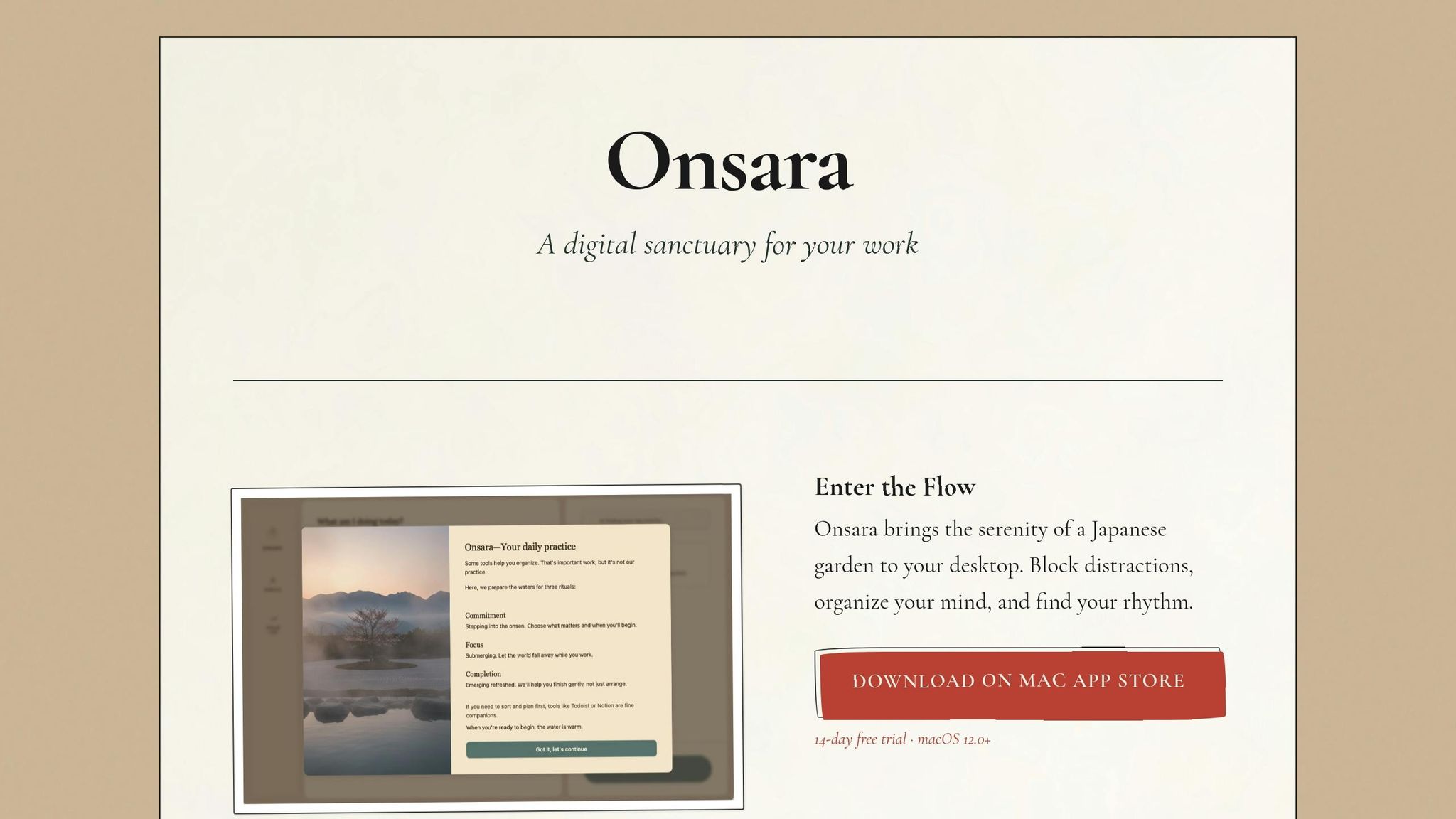
When even the smallest steps feel impossible, tools like Onsara can help cut through the overwhelm. ADHD freeze often worsens with decision fatigue - facing a long to-do list can leave your brain spinning, unsure where to begin. Onsara, a macOS app designed for people with ADHD and attention challenges, uses AI to guide you on what to tackle first, making it easier to get started.
You can download Onsara from the Mac App Store and see how it can help you break free from task paralysis.
How to Prevent ADHD Freeze at Work
Preventing ADHD freeze involves reshaping both how you approach your tasks and how you structure your workday. By tailoring your systems and environment to fit the way your brain works, you can stay ahead of potential roadblocks.
Create ADHD-Friendly Workflows
Instead of sticking to methods designed for neurotypical brains, try building a workflow that works with your ADHD tendencies.
Start by making your task management system visually appealing - use color-coding, emojis, and various project views to keep things engaging. For tasks that involve multiple steps, set up pre-defined frameworks. These can help remove uncertainty and give you a clear path forward.
To tackle time blindness, assign both start dates and due dates to your tasks rather than focusing solely on deadlines. For big projects, set your start dates earlier than you think you’ll need, and break the work into smaller, connected tasks. This way, you can chip away at the project without feeling overwhelmed [16].
AI tools like Onsara can also be helpful. These tools analyze how you work and suggest adjustments to optimize your workflow for ADHD-related challenges. Once you’ve got a personalized system in place, it’s time to think about how you organize your day.
Structure Your Workday for Better Focus
Minimize decision fatigue by planning your day in advance. When you reduce the number of choices you have to make, it’s easier to stay on track.
One effective method is the Eisenhower Matrix, which sorts tasks into four categories:
-
Do now: Urgent and important tasks.
-
Schedule: Important but not urgent tasks.
-
Delegate: Urgent but less important tasks.
-
Delete: Tasks that are neither urgent nor important.
This system helps you prioritize and focus on what truly matters [18][19].
Schedule your most mentally demanding work during your peak energy hours - often in the morning. Save simpler tasks like emails or routine admin work for times when your focus naturally dips [17].
Build a Supportive Work Culture
For those in managerial roles, creating a supportive environment can make a world of difference for employees with ADHD. Start by fostering awareness through open communication and flexibility. Encourage a work culture that accommodates different styles and needs [20].
Make it safe for team members to discuss challenges like executive dysfunction and ask for reasonable accommodations. Celebrate progress, not just end results, to reinforce a culture that values effort and improvement. This approach not only helps dispel misunderstandings about ADHD but also builds a more inclusive workplace [21].
It’s worth remembering that ADHD often comes with strengths, too. Traits like creativity, high energy, and unconventional thinking can be incredible assets, especially in dynamic work environments [20][22]. By embracing these strengths and supporting tailored approaches, you can create a setting where everyone thrives.
Conclusion
ADHD freeze isn’t about laziness or lack of willpower - it’s a neurological reaction to overstimulation that temporarily shuts down executive function [1]. Recognizing this distinction is a crucial step in addressing it, especially in knowledge work and SaaS environments where decision-making and task initiation are constant hurdles.
When you find yourself stuck, focus on resetting both your body and surroundings to break the freeze cycle. Techniques like lowering the mental barrier to starting tasks and using tools such as Onsara can help cut through decision fatigue and get you moving again. These immediate strategies align with the broader concepts discussed earlier.
For a more sustainable approach, consider adjustments that reduce decision fatigue over time. Design workflows with visual cues and structured frameworks, making task management more engaging. Assign start dates to combat time blindness, and plan challenging tasks during your peak energy times. Tools like the Eisenhower Matrix can also help you prioritize effectively.
If you’re leading a team, fostering a supportive work culture is key. Encourage open conversations about executive dysfunction and celebrate progress, not just perfection. Building systems that accommodate a variety of working styles doesn’t just support individuals with ADHD - it benefits the entire team.
The goal isn’t to eliminate ADHD freeze entirely but to understand its triggers, manage it when it arises, and create systems that reduce how often it happens.
FAQs
What’s the difference between ADHD freeze and procrastination?
ADHD freeze occurs when you feel completely stuck, unable to take any action. This often happens due to overwhelm or sensory overload. It’s not a matter of willpower - it’s an involuntary response where even starting feels impossible, no matter how much you want to.
Procrastination, however, is different. It’s a conscious decision to delay tasks, usually tied to avoiding emotions or feeling unmotivated. The main distinction? ADHD freeze is something beyond your control, whereas procrastination, while not always ideal, involves a choice.
If ADHD freeze is a challenge for you, tools like Onsara can help by breaking tasks into smaller, more manageable steps, making it easier to regain focus and move forward.
How can I get started when ADHD makes me feel stuck?
Feeling stuck, often referred to as the "ADHD freeze", can feel overwhelming, but there are simple ways to get moving again. Start by breaking down tasks into smaller, bite-sized steps and focus on completing just one at a time. Sometimes, a little physical activity - like a quick walk or a few stretches - can help clear your mind and spark motivation. Another useful trick? Tidy up your workspace. A cleaner environment can make starting a task feel less daunting.
Remember to be gentle with yourself. Practicing self-compassion is key - acknowledge that even small steps forward are still steps in the right direction. Tools like Onsara can be helpful in staying on track and building momentum. And if the struggle feels too big to tackle alone, reach out to someone who gets it - whether that's a trusted friend, family member, or a professional who understands ADHD-related challenges. You're not alone in this.
How can workplaces support employees struggling with ADHD freeze?
Workplaces can assist employees struggling with ADHD freeze by simplifying tasks into smaller, more achievable steps and establishing clear, short-term objectives. Frequent check-ins can provide guidance and keep employees aligned with their goals. Tools like timers and reminders can be incredibly helpful for managing time effectively.
Providing quiet or private areas for focused work and offering flexibility in how tasks are approached can also have a positive impact. Above all, cultivating a supportive and understanding environment - where employees feel valued and trusted - plays a crucial role in helping them thrive.
Related reading
- Best Apps for ADHD Task Paralysis (Tested 2026)
- 7 Best ADHD Productivity Apps to Beat Task Paralysis (2026)
- The ADHD Brain Dump Method That Actually Gets You Unstuck
- ADHD Decision Paralysis: How to Pick What to Do Right Now
- 5 Apps for Reading Buddhist Scripture Daily
Useful tools & services
Explore our tools for everyday work
Browse our focus app, PDF reader, and other products to find an option that fits your task.
Browse our productsThese are products built by AGS Advising.