Why Writers Should Use a 100-Year-Old Dictionary
Use the 1913 Webster's Dictionary to find layered definitions, deep etymologies, and literary quotations that sharpen word choice and inspire writers.
Modern dictionaries simplify language, but for writers seeking depth and inspiration, the 1913 Webster's Dictionary is a game-changer. This century-old resource offers detailed definitions, rich etymologies, and literary examples that modern tools lack. Here's why it stands out:
- Richer Definitions: Unlike today's brief explanations, the 1913 edition provides layered meanings, helping you choose the perfect word for your context.
- Etymology Insights: Traces word origins in detail, sparking new ideas for usage.
- Literary Quotations: Examples from Shakespeare, Milton, and others show how words have been used masterfully in the past.
These features make it a powerful tool for improving your word choice and writing style. Accessible through a Chrome extension, it integrates seamlessly into your workflow. By using this dictionary, you can elevate your writing with precision and depth that modern dictionaries often fail to provide.
The Problem: Modern Dictionaries Lack Depth
Simplified Definitions in Today's Tools
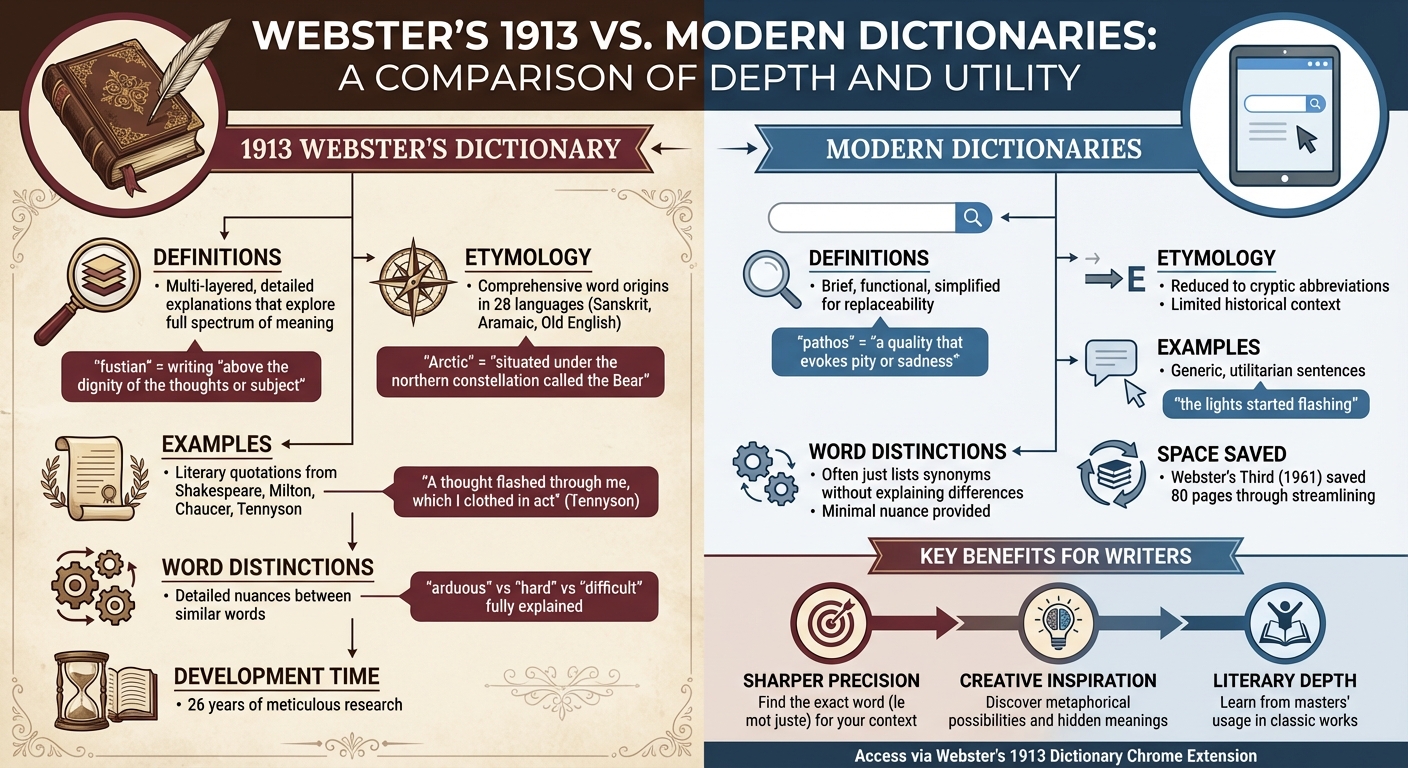
Modern dictionaries often reduce words to mere functional data - accurate but stripped of their essence. This trend toward brevity stems from what some critics describe as "replaceability", where definitions are designed to fit neatly into sentences rather than explore the full spectrum of a word's meaning and associations [5].
The outcome is a mechanical, almost lifeless portrayal of language. Take "pathos" as an example: The New Oxford American Dictionary defines it as "a quality that evokes pity or sadness" [3]. While correct, this definition misses the subtle distinction between personal, fleeting emotions and the broader, universal feelings that writers often seek to articulate with precision.
This trend isn’t new. When Webster's Third was released in 1961, its editors deliberately streamlined the dictionary's formatting, saving approximately 80 pages of physical space [5]. While practical, this approach inadvertently encouraged a view of words as interchangeable tools, rather than as carriers of unique, nuanced meaning. Beyond simplifying definitions, modern dictionaries have also trimmed away the rich etymologies and literary examples that once gave words their depth and vibrancy.
Missing Etymology and Literary Context
The issue goes beyond concise definitions - modern dictionaries have also stripped away the historical and artistic layers that make language a living, breathing entity. Comprehensive etymologies are often reduced to cryptic abbreviations, and literary quotations from authors like Shakespeare or Milton have been replaced by bland, utilitarian examples such as "the lights started flashing" [3]. These stripped-down examples feel more suited to a technical manual than to the evocative prose writers strive to create.
Writer John McPhee once observed that he consulted dictionaries for words he already knew far more often than for unfamiliar ones - by a ratio of at least 99 to 1 [3]. He wasn’t just confirming meanings; he was searching for the fine distinctions between similar words. As McPhee explained:
"Some dictionaries keep themselves trim by just listing synonyms and not going on to make distinctions. You want the first kind... in which you are being told the differences in their hues" [3].
Without these nuances, writers are left without the tools they need to find the perfect word - the le mot juste - to convey their exact meaning.
What the 1913 Edition Offers Writers
Detailed, Multi-Layered Definitions
The 1913 Webster's Dictionary doesn't just define words - it brings them to life. Take "fustian", for instance. While modern dictionaries might call it pompous writing, the 1913 edition goes further, describing it as writing "above the dignity of the thoughts or subject" [3]. That extra detail gives writers a clearer sense of what to avoid. James Somers, a writer and programmer, highlighted this richness when he noted that the dictionary's definitions are so evocative they "lend gravitas to your remarks, to sound so good, in fact, that it'd beat anything you could come up with on your own" [2][3].
Etymology as a Writing Tool
Noah Webster's dedication to his craft is evident in the etymologies of the 1913 edition. He spent 26 years creating his dictionary, even teaching himself 28 languages - including Sanskrit, Aramaic, and Old English - to ensure the etymologies were meticulously accurate [3]. These aren't just dry historical notes; they're creative sparks. Take "Arctic", for example. Modern dictionaries might stick to its geographical meaning, but the 1913 edition traces it back to its origin: "situated under the northern constellation called the Bear" [3]. That imagery opens up a world of metaphorical possibilities for writers. Understanding a word's roots allows for precise, intentional usage, which naturally ties into the literary examples the dictionary provides.
Literary Quotations for Real Usage
Building on this foundation, one of the most striking features of the 1913 edition is its use of literary quotations from greats like Shakespeare, Milton, Chaucer, and Tennyson [3][6][8]. Instead of dull, generic examples, it offers gems like this one from Tennyson for the word "flash":
"A thought flashed through me, which I clothed in act" [3].
Robin Rendle, a writer, observed that using this dictionary feels like sifting through a treasure trove of carefully selected literary contexts [2]. These examples, which Somers calls a "quarry of good things", don't just define words - they inspire. They show how words have been used by literary masters, turning the dictionary into a creative tool that teaches by example.
Who Invented Webster's Dictionary? - The Language Library
How This Dictionary Improves Your Writing
Drawing from its rich historical roots, this dictionary enhances your language skills and sparks creative storytelling.
Sharper Word Choice and Precision
The 1913 dictionary offers a fresh perspective on word selection. Unlike many modern dictionaries that often simplify definitions, this edition provides detailed explanations that delve into the finer distinctions between words. Think of it like comparing various shades of green - each subtly different yet distinct. For instance, its definition of "arduous" highlights the nuances between similar terms: "hard" is described as straightforward and general, "difficult" suggests the need for skill, while "arduous" emphasizes intense and sustained effort [1]. This depth helps you zero in on the exact word that fits your context, elevating both your precision and creativity.
Creative Inspiration Through Literary Examples
This dictionary does more than refine your vocabulary - it also serves as a wellspring of creative inspiration. Poet Dara Wier, who directs the MFA Program for Poets and Writers at UMass Amherst, shared that exploring the dictionary often leads to unexpected discoveries that fuel her creative process [9]. The inclusion of literary quotations from luminaries like Shakespeare, Milton, and Tennyson showcases how these words have been masterfully used in classic works. These examples reveal hidden layers of meaning, breathing new life into your writing and encouraging a deeper connection to your craft.
How to Use the 1913 Dictionary in Your Workflow
Incorporating this century-old resource into your writing routine can bring a layer of depth and elegance to your work. Its literary richness offers a unique way to refine your editing process and elevate your word choices.
Using the Webster's 1913 Dictionary Chrome Extension
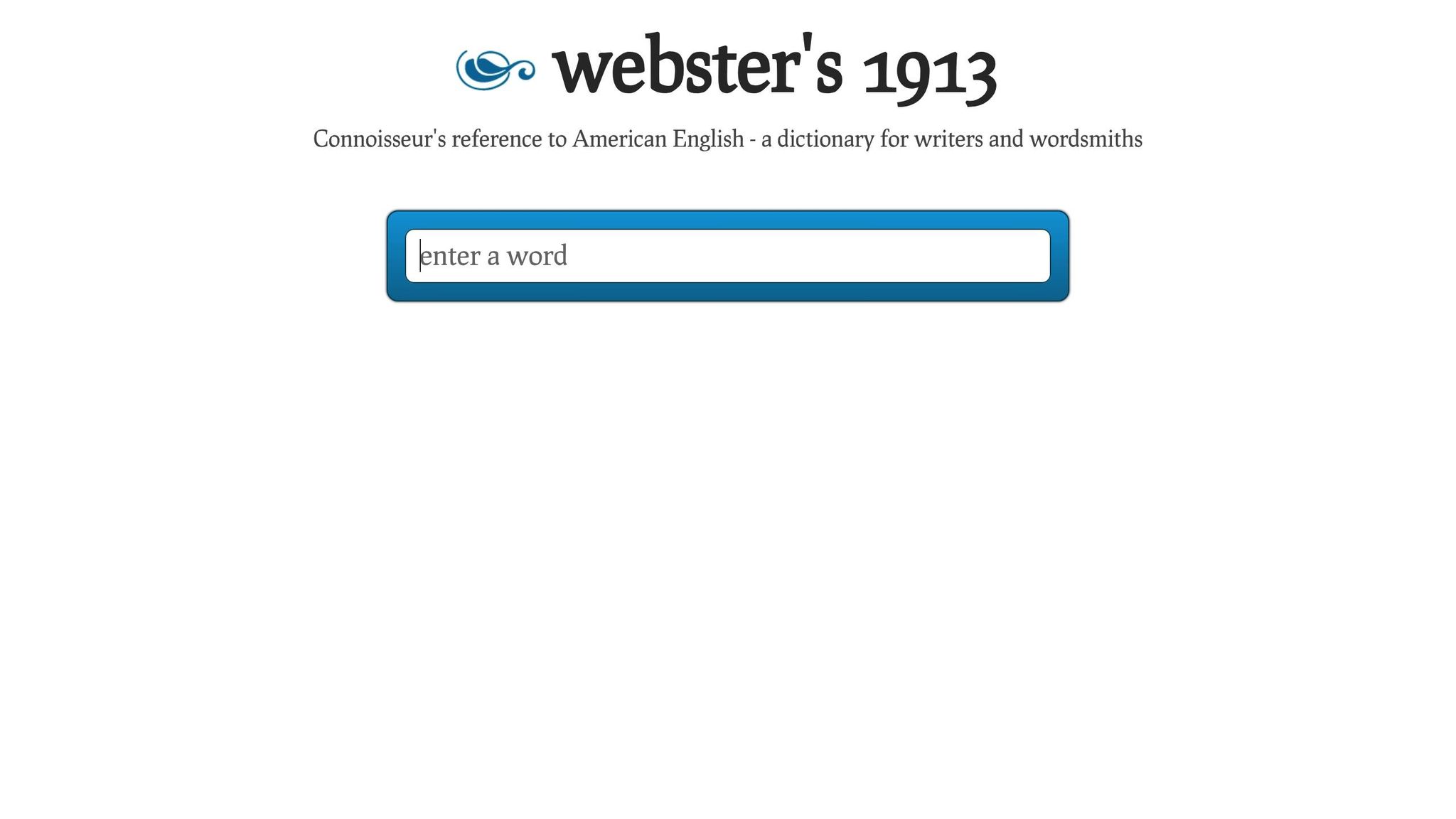
The Webster's 1913 Dictionary Chrome extension, created by Artisan Strategies, makes it incredibly simple to access detailed, literary definitions. With just a double-click on any word while reading or editing, a pop-up window provides the full 1913 definition - no need to open a new tab or disrupt your workflow.
This tool offers more than just definitions; it gives you a deeper understanding of language that can immediately enhance your writing. Even looking up familiar words can be enlightening. As designer and writer Robin Rendle explains:
"Webster's... feels like eleven doors open up when you look for the definition of a word you already know the meaning to." [2]
Tips for Enriching Your Writing Practice
The 1913 dictionary isn't just for quick lookups - it’s a gateway to exploring language on a deeper level. If a sentence feels uninspired, try searching for your main verb or adjective. The dictionary's detailed entries often reveal subtle variations in meaning that can help you find the perfect word to match your tone and intent [7].
Take time to explore the literary quotations and etymological notes included in the definitions. These details can uncover unexpected connections - like discovering that "tug" shares roots with "duke" - which might inspire creative word choices or fresh perspectives in your writing [8].
Keep the extension active as you browse articles or work on drafts. Let it be your constant companion, seamlessly enriching your writing process without interrupting your flow.
Conclusion
Modern dictionaries tend to offer simplified definitions, favoring brevity over depth. As David Perell aptly observes:
"Modern dictionaries have lazy definitions that focus too much on simplicity at the cost of precision" [4].
In contrast, the 1913 Webster's Dictionary provides a richer experience. Its layered definitions, detailed etymology, and literary examples from writers like Shakespeare and Milton offer a depth that modern tools often overlook. It treats words not as static entries but as vibrant expressions shaped by history and nuance.
This approach doesn’t just expand your vocabulary - it can profoundly influence your writing. Exploring familiar words in the 1913 edition reveals subtle distinctions and literary references that inspire more thoughtful prose. The articulate language and detailed explanations in these definitions lend a sense of depth and sophistication to your work, elevating every sentence you craft.
Accessing this invaluable resource is easier than ever. With the Webster's 1913 Dictionary Chrome extension by Artisan Strategies, you can integrate it seamlessly into your workflow. A simple double-click delivers detailed definitions directly to your screen, turning routine editing into an opportunity to refine your language and perspective.
Why settle for the bare minimum offered by today’s tools? Incorporating the 1913 Webster's Dictionary into your routine can transform not just your vocabulary, but the way you approach and appreciate language itself [2].
FAQs
How can a 100-year-old dictionary enhance my writing?
Using a century-old dictionary can bring a fresh dimension to your writing. These older references often contain words and definitions that have faded from modern use, offering a treasure trove of rich, precise language. Adding these forgotten gems to your writing can lend it an extra layer of depth and a refined touch.
Beyond vocabulary, historic dictionaries serve as reliable guides for spelling and usage, helping you maintain consistency while steering clear of modern uncertainties. This encourages more intentional word choices and minimizes dependence on tools like auto-correct.
Diving into the language of the past also reveals how words and expressions were once used, sparking creativity and inspiring a more thoughtful approach to your prose. By embracing this linguistic heritage, you can infuse your writing with both confidence and a timeless sophistication.
How can understanding word origins benefit writers?
Understanding the roots of words, or their etymologies, offers a fascinating glimpse into their historical context and underlying meanings. This knowledge empowers writers to choose words with greater precision and impact, enhancing their ability to convey ideas with clarity and depth. It can also bring an extra layer of richness to your writing through subtle language choices, imaginative metaphors, and a distinctive stylistic touch.
Digging into a word’s origin can also broaden your vocabulary and spark new ideas. This deeper connection to language helps you create sentences that leave a lasting impression on your readers.
What makes the 1913 Webster's Dictionary unique compared to modern dictionaries?
The 1913 Webster’s Dictionary is known for its elegant, literary definitions, often enriched with quotes from timeless authors like Shakespeare and Milton. Unlike modern dictionaries, which prioritize brevity and practicality, this edition brings a poetic flair that adds depth and nuance to its entries.
For anyone aiming to enrich their writing with historical depth or a more expressive vocabulary, this dictionary serves as a treasure trove of inspiration. It offers a distinctive lens on language that can ignite creativity and broaden your appreciation for words.
Related reading
- The Complete Guide to the Dhammapada: 423 Verses That Changed Buddhism
- Best Free PDF Chrome Extensions 2026 (View, Annotate, Edit)
- How to Read the Dhammapada: A Beginner's Practice Guide
- One Verse a Day: Why Less Buddhist Reading Leads to Deeper Practice
- Buddhist Mindfulness Without Meditation Apps: A Simpler Path
Useful tools & services
Explore a dictionary built for close reading
Classic Dictionary 1913 offers offline literary definitions. See what the extension includes before choosing it.
Explore Classic Dictionary 1913These are products built by Artisan Strategies.